Dear Me…

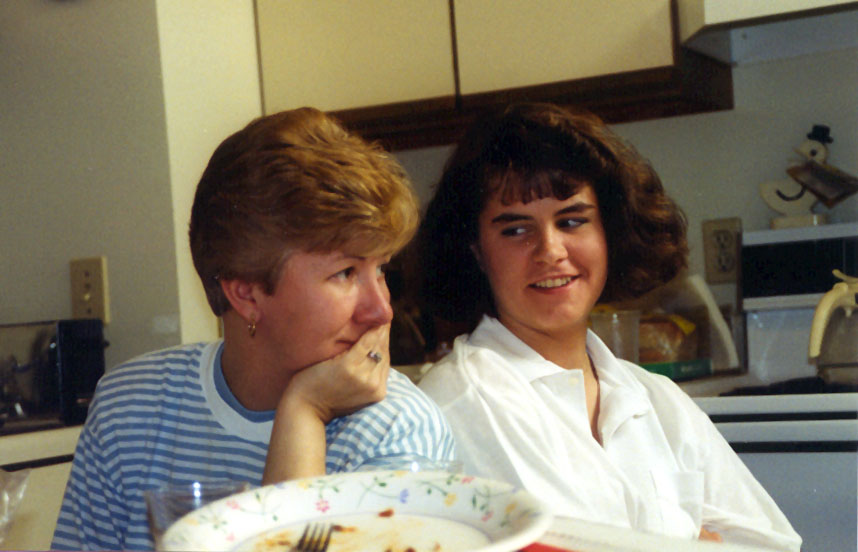
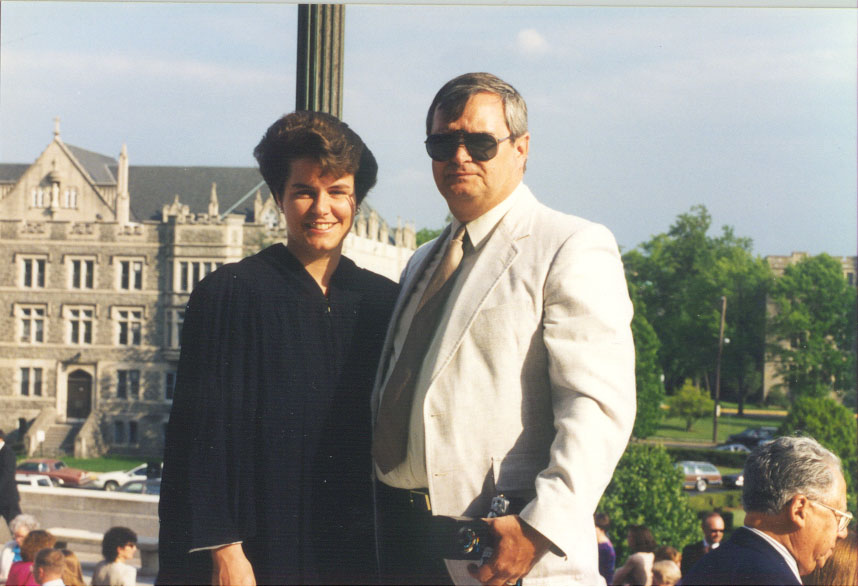
On Simple Mom last week, Tsh Oxenreider wrote a letter to her 15-year-old self. It inspired me to write a letter to my 17-year-old self.

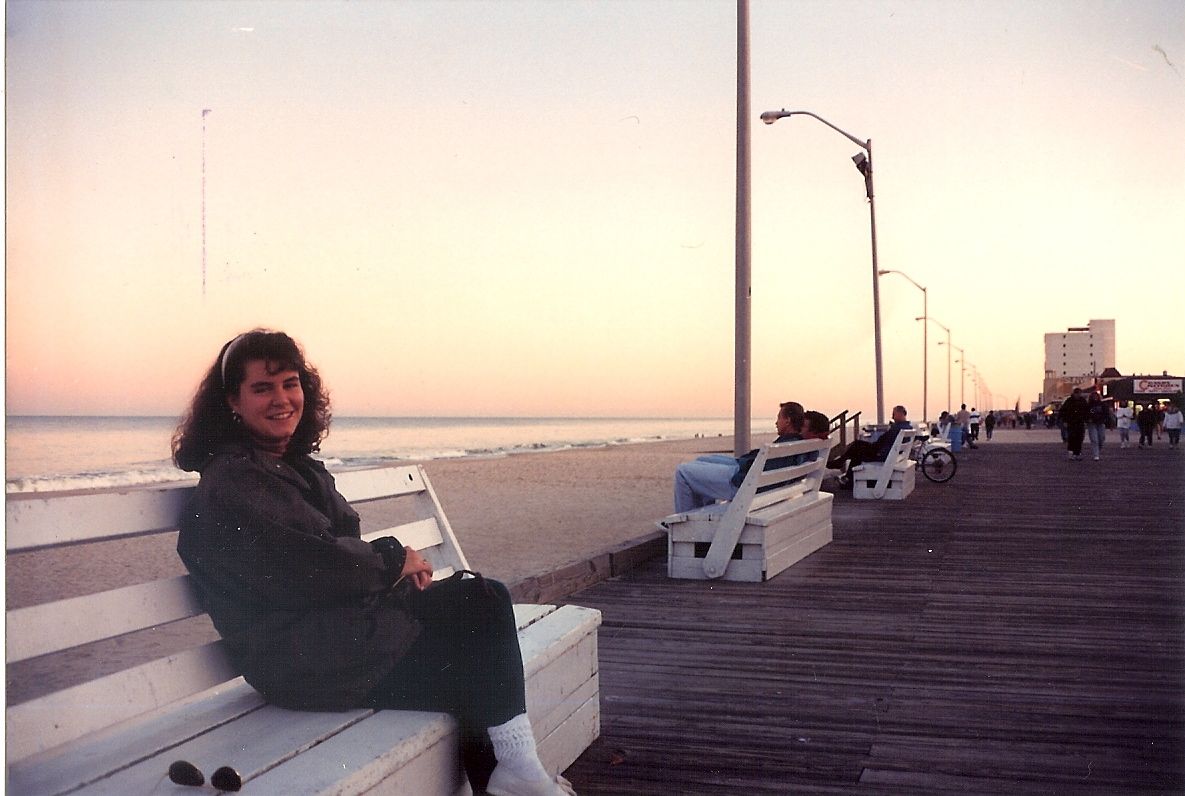
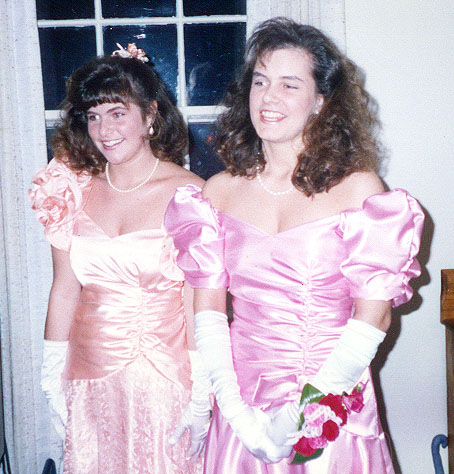
Hi 17-year old self! It’s Me, your 39-year-old self.

I know you don’t sleep much these days. That’s okay — that will come in handy in college. You’re really looking forward to college. The good news is, it’s everything you’re hoping for and more. Make the most of your time there: learn, play, make mistakes (small ones, please) and begin to figure out who you want to be.

You notice I said “begin.” Trying to figure out who you want to be is not only an ongoing (and lifelong) process, but what you are searching for will change. Parts of you that you weren’t even thinking about (nurturer, wife, mother) come out to surprise you later.

Through this last year of high school (ugh), you will doubt yourself. Don’t let those doubts change who you are inside. Your hard work, persistence, maturity, and values will pay off. There will be times when you are tempted to compromise your values. Don’t. Sticking to what you believe in will keep you on the right path, and will help you sleep at night.

I’m not going to tell you how things turn out 22 years later, or that everything goes easily. However, in many ways, our life has far exceeded our expectations.

By the way, that boyfriend you didn’t think you could live without? You can and will. And that best friend who supports you no matter what, still does.

Now go get some sleep, so you can take on whatever adventures tomorrow brings.

Love,

Me

Organizing My Thoughts

Last week, Joanna talked about revision, and how to manage the process with multiple projects in the works. Where do you begin?

I have a new novel outlined, a novel in revision, and several picture books straining to get out of my head. However, this last month of warm weather has taken me away from my writing. For good reasons: swimming, nature walks, bike riding, discovering dinosaurs, and drawing with chalk on the driveway. All of these activities and adventures brought precious moments of laughter, joy, and sweetness. They actively took up the conscious part of my brain, relegating my writing thoughts to the back of the line.

This week school began again. My house is quieter, and my time is freer. So how do I get my writing to again demand its place at the front? It’s hard to know where to begin when you have a head full of different projects in different stages.

Perhaps my son’s LEGO collection can shed some light (bear with me). He has a large collection of pieces, some similar, some specialized. It includes large airplane wings and car frames. There are medium-sized long pieces perfect for creating apartment buildings or shopping centers. There are tiny pieces that make great headlights, and those that sparkle when made into flashlights.

My son prefers to build his own creations, rather than build a kit once and put it on a shelf. He has many ideas in his head, and some days he can’t build fast enough to keep up with all of them.  So with this large diverse collection, how do we keep him organized so that he can build most effectively and efficiently?

We assessed the types and quantities of his pieces, and bought some storage boxes and bins. We spent a Saturday taking his two large bins of pieces and sorting them. And sorting them. And sorting them some more. His collection went from this:
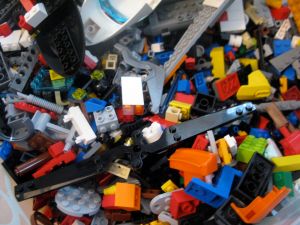
Photo by Katie Cullinan

To this:

Photo by Katie Cullinan

So what does this have to do with my writing? Right now I have many pieces, projects, and writing tasks in the works.  I have outlined a new novel to be written, which means more research along the way. I have a novel in revision, which is in need of reframing and simplifying. I have three newer picture book manuscripts that have been made into dummy books. These need prioritization, and then new query letters readied for agents. In a few months, November will be upon us and I need to decide whether to participate this year in PiBoIdMo (Picture Book Idea Month) or NaNoWriMo (National Novel Writing Month), and then get prepared.

So perhaps the best way to get started is to get organized. My files are organized. My notes are organized. What are not organized are my thoughts. Which item should take priority? Is one more important?

Writing out what I have in the works (above) has at least helped me assess the pieces.  Now on to one project at a time.  My new novel’s characters are screaming the loudest, so I’ll dedicate this upcoming week to them. Maybe I’ll take a break mid-week and send out some query letters.

Hopefully I’ll be writing a post next month about the first draft I’ve completed on my new novel. And then on to the next project.

The challenge (as it is with my son) is to keep all the pieces organized and in their places.  Let’s hope we can meet the challenge. He and I feel so much happier when the pieces of our creative processes are organized.
Stories Revisited

Do you know the Stinky Cheese Man? The Stinky Cheese Man? The Stinky Cheese Man? (okay, that tune really belongs to the Muffin Man, but you get the picture.)

I don’t know how we missed each other over these last ten years, but I recently met the Stinky Cheese Man. He and some of his friends pop by for a visit in The Stinky Cheese Man and Other Fairly Stupid Tales, by Jon Scieszka.

I had previously read some of Jon Scieszka’s Trucktown stories (which honestly, I’m not that fond of), and was pleased to discover this book. On full display here is Mr. Scieszka’s sharp wit and humor. Combined with Lane Smith’s oddball illustrations, there is much to read and look at in this book.

Personally, I would be hard pressed to attempt to retell a well-known fable or fairy tale. One of my critique group partners is working on a retelling of Rumpelstiltskin. I applaud her for taking on this challenge. She is braver than I.

I borrowed The Stinky Cheese Man from the library to read with my son. We both loved it, and have read it nightly. Unfortunately, now it has to go back.

The tales are creative (Cinderumpelstiltskin, the Other Frog Prince, and The Princess and the Bowling Ball for example), and some are so wrapped up in Jack’s attempt at putting together of the book (another interesting feature) that they never really get told (Little Red Running Shorts, Chicken Licken).

What was amazing about this book was that not only did I enjoy reading it repeatedly (and honing my many story voices, I might add), but both my son and I thought it was very funny. Mr. Scieszka uses wit and child humor without being gross or morally questionable. As a bonus, my son now knows the components of a book with certainty, because Jack takes us along as he assembles the book. The fact that the Table of Contents falls on some of the characters helps as well.

In looking at the Scieszka book list on Amazon, I apparently have missed quite a few other books that my son and I might enjoy. We’ll have to try The True Story of the 3 Little Pigs or Squids Will Be Squids.

Do you read Jon Scieszka books? Which are your favorites?

The Thrill of Achievement

I am utterly and completely engrossed in the Olympics right now. I was thrilled to discover that I can watch the events live on my computer and iPad during the day. Even though I watch most of the events I am interested in each day, I still try to turn on the coverage in the evening to see the condensed version, just to hear the commentary.

My favorite Olympic sports to watch are swimming, gymnastics, and beach volleyball. When those are done, I will catch track and field.

So given that I watch very little television on a regular basis, what is it about the Olympics that captivates me?

I find success very appealing. In particular, I enjoy watching athletic success. No offense to those who are at the top of their games in the finance, business, or other arenas. Talented people who can push their bodies beyond what we think is possible is amazing to watch.

The Olympics coverage allows us to almost be there with them as they compete. As they win or lose. As they begin their athletic careers, continue them, or conclude them. Perhaps in comparison to “reality TV”, I prefer to see people who are “famous” because they are actually talented. They have taken a gift (mental and physical) and advanced it. Pushed it. Stretched it. Soared with it.

Some athletes are very interesting to follow for their personal stories. I feel invested in their competitions. I cry with them, and celebrate along with them as they reach this high point in their careers. My son was watching swimming with me yesterday, and he commented, “You know they can’t hear you, right, Mom?” I laughed, and told him that I cheered them on hoping it helped them in some little way. Maybe I could contribute something to their achievement, since I gave up any dreams of athletic competition long ago.

We as a nation have followed these athletes, soaking up their stories and feeling connected to them as Americans. I hope the wonderful stories they have shared with us pale in comparison to the parts of the story that they have kept for themselves. The secret dreams. The dashed hopes. The overwhelming desire to try for just one more medal. The thrill of beating their own personal best time. The contentment and satisfaction of being among the top in their field.

Congratulations to all of the Team USA Olympic athletes who are competing in London. I hope your personal stories will give you many happy memories for years to come.

Telling a Good Story

In addition to reading and writing, I also love to watch movies. I enjoy many different types of movies, but I have the best experience with movies when I can watch them with my husband. He prefers action and suspense movies (with a little horror or questionable 70’s movie thrown in) and I prefer intelligent comedies and independent films (with a little romance or animated movie thrown in).

Often it is difficult for us to agree on a movie to watch. Most of the time, we take turns choosing the movie. He is willing to try my recommendations from Filmspotting, the movie podcast I listen to. I am willing to try the movies that peak his interest after searching the OnDemand or Netflix listings.

So as you can imagine, some movies I like, some he likes, some neither of us like, and some we both like. For the movies that we both like, the commonality seems to be one thing: a good story. And how do we appreciate a good story? Good storytelling.

Whether it be movies or books, what engages me most is how the story is told. Is it suspenseful? Is it funny? Are there engaging characters? Does it show me a compelling situation/location/condition that I have never seen? Or does it resonate within me… something I have experienced myself?

So assuming the critical elements are there to capture my interest, the next key is to KEEP my interest. The story needs to keep me engaged throughout. After all, I do have the option to turn it off (or walk out of the theater) at any time. The often short attention span of a viewer demands that something happen. Frequently.

Cover of

Cover of Meet the Robinsons

Follow all that? Let me use one of my family’s favorite movies as an example. Meet the Robinsons (2007) is on frequent rotation in our house. It is the story of Cornelius (or Lewis, as he prefers), an orphan with a brilliant mind. IMDB describes the story as:

Lewis is a brilliant inventor who meets mysterious stranger named Wilbur Robinson, whisking Lewis away in a time machine and together they team up to track down Bowler Hat Guy in a showdown that ends with an unexpected twist of fate.

So what makes the telling of this story so interesting? With a close look, the elements of the story are clear. Lewis wants to be a part of a family. Everything else in the story drives towards that. His creativity and inventing brings him closer to finding a family that is the right fit for him. He is challenged to fix a time machine to save the day, gaining confidence in himself. Lewis is forced to confront the Bowler Hat Guy and the role he has played in his life. All of these actions happen to drive the story forward.

As writers, we can look for examples of excellent storytelling all around us. Great stories told well can be found in movies, in books, in short stories, even in the family tales told by Aunt Eleanor every year at Thanksgiving.

For more thoughts on storytelling and pacing, check out this article about how Pixar approaches the development of its stories.

What captures you when hearing/reading/watching a story? What makes you want to hear/read/watch them again and again?

The Common Experience

1930, 1939, 1947.

The respective years that children’s classics The Little Engine That Could (Watty Piper), Mike Mulligan and His Steam Shovel (Virginia Lee Burton), and Goodnight Moon (Margaret Wise Brown) were published.

Wow. I sit here and read these books (and others) to my children today, and they were written over half a century ago.

So what is it about these books that continue to charm new generations of children? What is it that makes my children smile, and ask to read them again and again?

As I mentioned in a previous post, I have been reading Leonard S. Marcus’s biography of Margaret Wise Brown, called Awakened by the Moon. I have now finished it. It is part biography, and part history lesson on the beginnings of the picture book market. I borrowed the book from the library to learn more about Margaret Wise Brown. I not only now know more about this creative, eccentric, and talented woman, but it has also given me pause to consider what is at the core of great picture books, old or new.

At the SCBWI Conference in New York in January of this year, several speakers encouraged the participants to find the commonalities of the childhood experience. The idea is that regardless of background, culture, gender, ethnicity, or education, all children share certain common feelings and experiences in their development.

The desire to be independent, while still feeling safe.

Forging his/her own individual identity

Figuring out how the world works

Fear of the unknown

Feelings/Emotions (for example, love)

Interaction with their environment (urban/rural, natural/man-made)

Imagination and dreams

Looking up to someone else

Needing and giving help

Caring for others

Feeling wanted/needed

Trying new things

Wonder

This is just a list I started brainstorming. What else do you think are universal experiences in childhood?

So our goal as children’s writers should be to tap into these experiences. We should attempt to create a story that a child will identify with. That will make them laugh. That will make them want to be that character (or glad they are not!).

As those classic books demonstrate, if you can effectively reach a child at a fundamental level, perhaps your book has a good chance to be around to delight children for many years to come.

Sounds aspirational, yes? I hope so. I’m off to work on a new picture book idea!

School Is Out!

As the doors swished closed on the bus and my son waved goodbye, my eyes filled with tears. It took me completely by surprise. I hadn’t expected his last day of Kindergarten to be so emotional. Perhaps it’s because he has grown so much in this last year. Blossomed, really. He started the school year as a little boy, and now he is a BOY. A boy full of questions, creativity, and energy.

This week is our first full week of summer break. For us, that means I have both kids at home with me, and we have days full of “after schooling” (additional activities and learning in focus and interest areas), nature walks, swimming lessons, bicycle riding, and playing. And reading. Lots and lots of reading.

Our community has some good reading programs. My son participates in his elementary school program, as well as the one at our local library. Each week, we visit the library to play, do some crafts, return our bagful of books, and borrow a new bagful. So what are we reading to start the summer?

My son: Lots of reading together and reading out loud

The Magic Treehouse series by Mary Pope Osborne

Anything Dr. Suess

That Rabbit Belongs to Emily Brown, Cressida Cowell

We Are in a Book, Mo Willems

The Good Little Bad Little Pig, Margaret Wise Brown

My daughter: lots of reading together- lots of books with pictures!

The Runaway Bunny, Margaret Wise Brown

Bunny Eats Lunch, Michael Dahl

Moonbear, Frank Asch

The Very Hungry Caterpillar, Eric Carle

All of Baby Nose to Toes, Victoria Adler

Big Bird’s Guessing Game About Shapes

Me:

The Hunger Games Trilogy, Suzanne Collins

Ford County Stories, John Grisham

Inheritance, Christopher Paolini

Lots of books to read, and fun to have. I hope you and your families have fun this summer, both inside books and outside exploring!

Happy Birthday!

Please bear with me as I depart from my usual topics to wish my mother a very Happy Birthday!

Photo by Katie Cullinan

Yesterday was a significant birthday for my Mom (I’ll do the gracious thing here, and not mention which one), and we celebrated in style. I sprung for some whole lobsters, along with salt potatoes, local corn on the cob, and rolls. It reminds me of clambakes we used to have every summer, with the lobsters sitting in for the clams this time.

It was yummy. More importantly, we were all together. My Mom and Dad made the four hour trip to my house in the morning, and my brother surprised us by driving down from Massachusetts.

For every birthday, Christmas, and Mother’s Day, all my Mom has ever asked for is “good kids.” That has been extended to “good kids and grandkids.” As you can imagine, that is very difficult to shop for (and potentially hard to deliver when you are a child).

I watched my Mom survey the many pots of cooking food, warm conversation, and her family all around her. And she got a little teary. At that moment, I realized that it wasn’t “good kids” she really wanted. What really makes her happy is being with her family. Silliness, chaos, weirdness and all. For this birthday, we were able to deliver.

Happy Birthday, Mom. We love you very much. Best wishes for many more healthy, happy birthdays!

Surrender

When asked if they have any regrets, some wise people will say that they do not. All of their experiences have made them who they are.

Our experiences, good or bad, influence us as people. As writers, our experiences can also shape the characters, settings, themes, and mood of our stories.

Specifically as children’s writers, we draw from many places. A memory of a warm, loving childhood. Or a not so great one. A book we read. A movie we loved (or hated). A place we visited full of rich culture and surroundings. We may have even observed a child, doing or saying something innocent, loving, heartbreaking, or brave.

I have recently been reading Awakened by the Moon, the biography of Margaret Wise Brown by Leonard S. Marcus. Brown is best known as the author of the timeless Goodnight Moon and Runaway Bunny. In addition to observing the children that she worked with, Margaret believed that “memory {was} the ultimate source of her creative work.” She said that, “as you write, memory will come out in its true form.”

Everything informs our memories, whether we know it or not.

Material for our stories can come from an infinite number of places. You need only open yourself to it. Surrender. Let the memories wash over you. Truly open your eyes, heart, and mind, and see what comes.

You may find that the laugh and broad smile of an old friend makes its way into one of your stories. You may set a story on an unspoiled beach where you once stood as your cousin got married. You may remember some advice you once gave, and try to find a way to give better advice in your written world.

“Write what you know,” has been said to writers for many years. If we are brave enough, we may realize we know more than we think we do.

Creating Something New

My son and I read a sweet story last week: Lissy’s Friends written and illustrated by Grace Lin.

Cover of

Cover of Lissy’s Friends

It is the story of Lissy, the new girl at school. That probably sounds familiar. However, the twist in this story is that to deal with knowing no one, Lissy creates some friends – from origami paper. She starts with a bird fashioned from the school menu, which she appropriately names Menu. Lissy creates many more animal friends, until a playground mishap blows these paper friends away to Paris.

Other children have been watching, and they want to make origami too. Lissy makes new school friends by sharing a talent special to her – origami. She finds new friends on her own terms.

I know a little about origami. My father makes origami boxes and animals to delight his children and grandchildren. He has given me several origami kits over the years, which I have used to make some basic origami animals. See one of my son’s creations at the bottom of this post.

Origami reminds me of the creative process, as well as the revision process. Origami begins with just paper (albeit, colorful paper); paper that is two dimensional and flat. With a few folds, it is turned into something that has a life of its own. A story has similar potential. It can start with an idea, and grow into something that has a life of its own.

It can be scary to revise, especially if you consciously notice the story changing. But if you allow the process to take the story where it wants to go, the results can be amazing. Your story sometimes goes where you never thought it would, and it is a much richer, more interesting story after the journey.

How do you create something transformational in your writing, or in other creative pursuits?

I would also like to give a plug to the program that brought Lissy’s Friends to my family. Both of my children have participated in Dolly Parton’s Imagination Library. It is a program that brings a new, age-appropriate book to preschool children in their homes each month until they turn five. Our local United Way sponsors Imagination Library in our area, and my children love receiving a book in the mail addressed to them. They can’t wait to see what stories each new book has to tell!