Choosing the Right Books for Your Advanced Reader

I have an advanced reader in my house, who devours new books. My son has read and enjoyed many of the classics, such as The Lion, the Witch, and the Wardrobe; The Indian in the Cupboard; James and the Giant Peach; Charlotte’s Web; and The Borrowers. Aidan likes the newer books too, like Harry Potter and the Sorcerer’s Stone, Holes, and The Diary of a Wimpy Kid. He is eager to discover new series and new books, preferring fantasy and adventure topics.

He is, however, only in 3rd grade. I do not yet want him exposed to the world of middle school, nor do I want him worrying about the kinds of topics kids that age face. I do not want him to be exposed to excessive violence or death.

It is an ongoing challenge that I have in finding new quality books to read, and it is a topic I have discussed frequently with his 3rd grade teacher, Irene Drake. I’m sure many of you parents and teachers have faced the same issue.

So far, my approach has been to dig deep into the lists of “must read” books for his age, and sought recommendations from librarians, teachers, writers, and other parents. I also discovered the Scholastic Book Wizard, which with a little tweaking comes up with a list of appropriate books by Lexile Level or DRA along with age range. However, for Aidan, his reading level with a grade 3-5 filter only comes up with non-fiction books. Those are certainly helpful books for when he is in a non-fiction mood, but not always.

Joanna shared a list that her library prepared for accelerated readers. Some that caught my eye for Aidan were: The Moffat’s, The View from Saturday, The Enchanted Castle, Escape from Mr. Lemoncello’s Library, Whittington, and Extra Credit.

What suggestions do you have for accelerated readers? Please share in the comments.
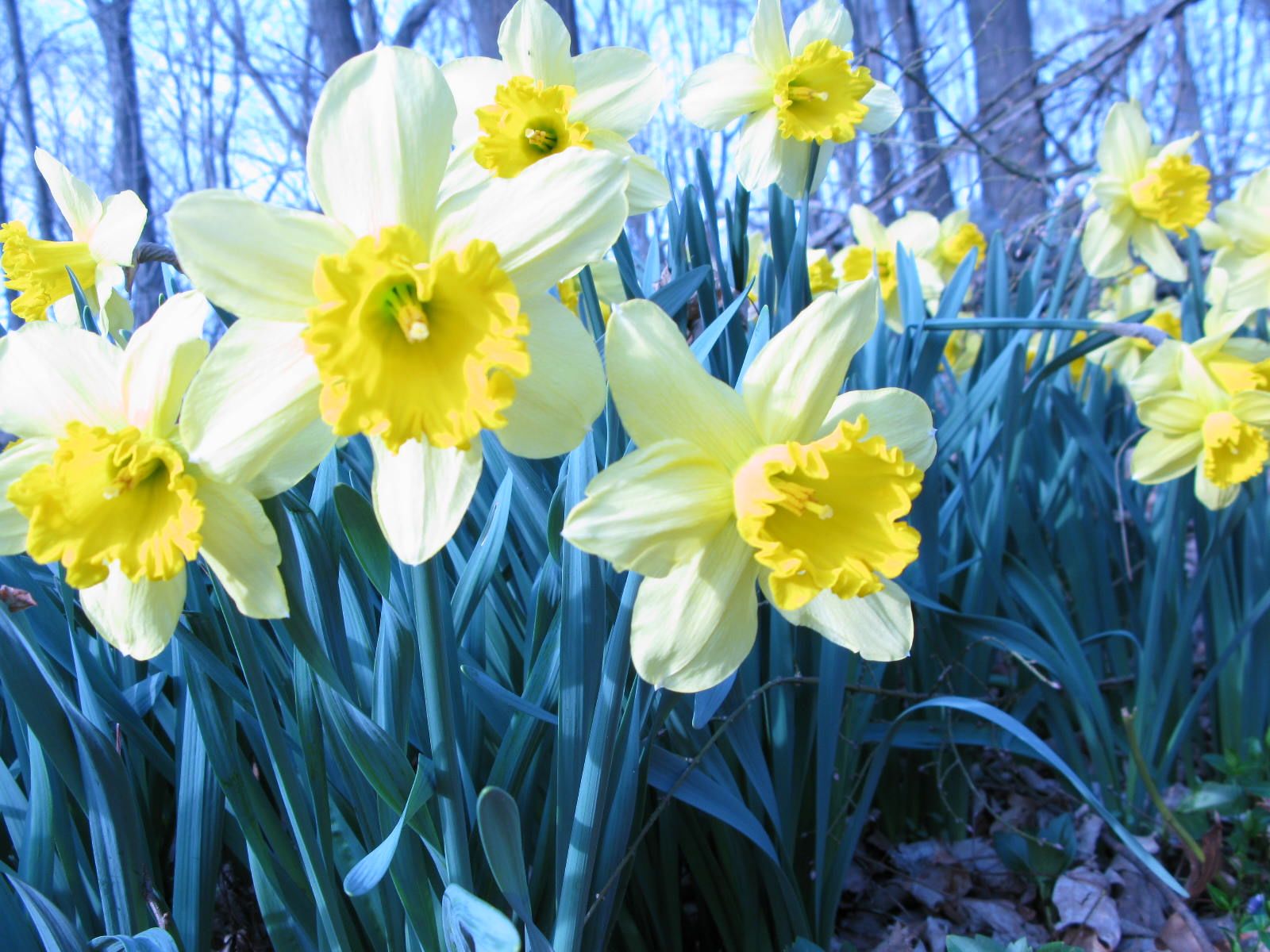
Happy Easter and Welcome to Spring!

I find Easter and the beginning of Spring as a time of reflection, much more so than on New Year’s. In January, it is still cold and gray (and often we are knee-deep in snow), so it is hard to see the potential for the new year. For those of you who celebrate Easter (as I do), it is symbolic of rebirth, renewal, and joy. And if you’re lucky, the sun is peeking out more often and the temperates are gradually rising.

Photo by Katie Cullinan

There is promise in each day – a promise that what has incubated all winter under the snow and within ourselves is ready to blossom. You just need to look – are you ready to be brave? Take on that new challenge? Try something new? Take a bold step towards a new direction?

Best wishes for a restorative and peaceful Easter and Spring to all of you. Get out there and shake things up. What are you waiting for?

Review: Not Your Typical Dragon/ Introducing Max!

Screen Shot 2015-03-20 at 12.07.16 PMNot Your Typical Dragon

Written by: Dan Bar-el

Illustrated by: Tim Bowers

Viking Books for Young Readers, 2013, Imagination Library Paperback Edition

Target Audience: Ages 3-8

Genre: Fiction

Theme: Differences, Uniqueness, Humor

How We Discovered This Book: This book was an Imagination Library selection. The Imagination Library is such a wonderful program, and I am sad that just this month my daughter received her last book from the program (it ends at age 5).

Summary: A small dragon names Crispin turns 7, and is expected to breathe fire. But things work a little differently for Crispin – he breathes other things like beach balls and marshmallows. His parents are aghast, but Crispin eventually finds his way with the help of a friendly knight. Crispin’s unique talents come in handy when a problem threatens his family home.

What I Liked: Both the text and illustrations are so whimsical, and you are rewarded with something new to notice each time you read it. The author has provided some good thoughts about embracing your differences, but he does it with subtlety and humor.

What Did My Kids Think? My kids loved the illustrations – especially when Crispin breathes funny things. They couldn’t wait to turn the page to see what Crispin did next. They were very happy for him at the end of the story. This book is on frequent rotation at my house.

Resources:

ReadWriteThink has some companion activities for young children, working with each of the items Crispin breathes.

Activity Village has dragon-themed crafts, activities, and printables… even a video for making a dragon’s head from origami. I’ll have to try the dragon made from egg cartons.

Haven’t seen the movie How to Train Your Dragon or its sequel? Now might be the time!

—————————————————————————————————————–

Today we’d like to introduce you to a new contributor to the blog. His name is Max, and he has his own YouTube Channel called Puppets Love Children’s Books. We’ve asked him to stop by every so often to give us his own unique perspective on picture books. Max loves reading children’s books, watching movies, and hanging out with his friends. His favorite books make him laugh, or surprise him.

Gather up your kids, grandkids, or the young at heart, and see what Max has to say!

Interview: Irene Drake, Third Grade Teacher at Rockwell School

This week, we have the pleasure of welcoming Irene Drake, third grade teacher at Anna H. Rockwell Elementary School. Irene discovered her calling as a teacher 14 years ago after serving as an accountant for 2 non-profit companies. She was a 6th grade Math and Language Arts teacher before becoming a 3rd grade teacher at Rockwell School 8 years ago. She holds a Masters of Science degree in Elementary Education and a 6th year degree in Educational Leadership.

KDC: Irene, thanks for taking time to give us your insights into educating children. Tell us what inspired you to become a teacher?

ID: There were many things that inspired me to become a teacher, but if I could choose one I would say it would be Mrs. Miller who was my 2nd grade teacher. The way she cared about us as individuals, pushed us to always exceed expectations, and used her love of music to make learning more fun was a huge inspiration to me and had me thinking about becoming a teacher like her at a young age. She was also the teacher who inspired me to learn how to play piano and take lessons.

KDC: What is your favorite picture book and chapter book?

ID: My favorite picture book is Strega Nona by Tomie DePaola because it reminds me of my family growing up. My favorite chapter book is Tales of A Fourth Grade Nothing by Judy Blume.

KDC: What are some techniques that you use to get reluctant readers engaged in reading?

ID: Some techniques that I use are:

  1. I use engaging chapter books that are part of a large series in order to hook the students and hopefully inspire them to want to continue reading more books in that series.
  2. I use technology to engage reluctant readers. Programs like Lexia and Raz-Kids are engaging for the students and provide those reluctant readers with a choice between fiction and non-fiction stories.
  3. I tap into the children’s interests to purchase books that might be engaging for those reluctant readers.
  4. I encourage them to try different types of books and I utilize our Media Specialist to help find engaging books for students who are reluctant readers.

KDC: You may have 3rd graders who read above their age level and are ready for more challenging texts, but still need developmentally appropriate content. If one of those children asked you to recommend a book, what would you tell them?

ID: There are a few series that are developmentally appropriate and meet the needs of students who need more challenging texts. I would lead them towards the 4th, 5th, and 6th grade texts that I have in my personal library and guide them towards series’ written by Andrew Clements, Madeleine L’Engle, Roald Dahl to start. All of the books in my library have been previewed by me and checked for appropriate content. Any book that is not developmentally appropriate does not appear on my shelf.

KDC: What changes are you seeing with the implementation of Common Core and a shift to more non-fiction reading?

ID: Non-fiction reading accounts for over 50% of the reading lessons, and non-fiction reading occurs in all subject areas like Science, Social Studies, and Math. Students are gravitating more to non-fiction books when making choices for independent reading. I have also seen more paired text options for students that include non-fiction texts. Students are now understanding that a map, graph, chart, etc.  is considered non-fiction reading.

Thank you Irene for your great perspective on education and the teaching of young readers! We appreciate your time.

Love and Romance

I hope this post finds you all feeling loved on this Valentine’s Day weekend. Here in the Northeast, we are trying desperately to stay warm and snuggly with temperatures in the double digits below zero.

Screen Shot 2015-02-15 at 5.17.46 PM

So do you consider Valentine’s Day to be about romance, love, another attempt by businesses to get more of your money, or a reminder of how we should treat our loved ones all year long? Or a combination of these? As the holiday approached this year and I am knee deep in writing a middle grade novel where two girls discover dating, it made me think about the role of romance and love in children’s literature.

Let’s start with the idea that middle grade novels are about pre-teens testing their boundaries and beginning the journey of self-discovery. And teenagers are focused on breaking out of the system and forging their own paths. So with that logic, experiencing romance is a part of that self discovery. What do I like about the opposite (or same) gender? What do I expect from a relationship? How do I expect to be treated? What makes me happy? What tells me that I am valued, appreciated, and desired? How do I show affection? How do I make a connection with someone else? (As I write this list, it makes me think that romance and love is a work in progress for our whole lives.)

It would then follow that as teenagers (with some of these ideals formed) that they would begin to break out of what society expects. Perhaps they experiment with the content of their relationships, or they choose unconventional partners, or they choose to opt out of the whole “have to have a boyfriend/girlfriend” ideal.

And then to add complexity to the forming of their idea of what love is, we overlay their non-romantic relationships: mom, dad, siblings, extended family, and best friends. Sometimes these relationships are their example/non-example for how to form a relationship, or they use these non-romantic relationships as experiments for what might work in their romantic relationships.

So, despite certain trends to make literature more edgy (YA in particular), I think that a fuller exploration of how young people explore romance and love is much more interesting. And if done correctly and honestly, it will connect better with young readers’ internal experiences, regardless of the time in which the novel is written.

A Sequel to a Classic and a Poll Update!

Many of you may have read in the news this week about Harper Lee, the author of the Pulitzer Prize-winning To Kill a Mockingbird. Ms. Lee is now 88 years old, and the manuscript she wrote before To Kill a Mockingbird back in the 1950s was recently discovered, and will be published in June. It takes place 20 years later, when an adult Scout comes back to visit her father.

Besides my curiosity on what this story might contain, what struck me most was a statement that the publisher made. They stated that the story would be published in its entirety (300 and some pages) without revision. Why no revision? Is it because Ms. Lee’s capabilities at 88 aren’t what they were 50 years ago? Because it is so perfect that no revision is required (I doubt it)? Or perhaps as Joanna noted, if it were revised it would be through a completely different lens than she would have had 50 years ago. Her experiences and perspective would have colored and changed how she writes, for better or worse.

I am most interested in a more craft-driven academic comparison of the two works, rather than excited for the story itself. My experience with To Kill a Mockingbird is the reason for my current approach to movies made from books. Back when I first experienced To Kill a Mockingbird, I saw the movie first. Once I read the book, it did not have any chance to be as interesting – how the story played out in my head was completely driven by the black and white images of Gregory Peck that I had already seen. Today, I swear by reading the book first, before I watch the movie. Then my own images are already rooted in my mind, and I can enjoy the movie from the perspective of seeing how the filmmaker might interpret the material. Often my mental images are richer, but sometimes the filmmakers can use technology to create some pretty amazing things (especially with fantasy or sci-fi materials).

Are you interested in reading Harper Lee’s new book, Go Set a Watchman, when it comes out in June?

An update on the poll we ran a few weeks back: There was a glitch in the poll that prevented us from getting complete results. Here’s your second chance to participate! Take a minute to tell us in the comments what type of book is your favorite, and we will choose a winner who will receive a book from a Connecticut or Wyoming author.

Some possibilities:

Funny

Fantasy/ Science Fiction

Realism

Non-Fiction

Mystery/Suspense

Thriller/Crime

Textbook

Other- whatever else might trip your fancy!

Welcome to the new and improved blog!

After almost three years writing at A Life Spent Reading, we’ve learned much about what we like to blog about, what our readers enjoy hearing about, and what it takes to maintain a blog (even if it is a labor of love!)

Last October, we asked you what you most wanted to see on the blog. A third of you told us you most enjoyed the book reviews, with interviews and writing advice coming in a close tie for second. Joanna and I also discussed what we liked about other blogs and investigated some updated features.

So today we are proud to announce the re-launch of A Life Spent Reading! We’ve begun incorporating your feedback on content, added new functionality and updated to a fresher, cleaner look. We hope you like it! If you are an email subscriber, click over to the site itself to have a look.

To celebrate the re-launch of our site, we’re holding a contest! Tell us your favorite type of book, and we will randomly choose a winner from the participants. The winner will receive their choice of one of the following books, chosen from the local authors section from each of our towns’ independent bookstores:

Connecticut:

Little Author in the Big Woods: A Biography of Laura Ingalls Wilder, Yona Zeldis McDonough

The Serpent’s Curse, Tony Abbott

Wyoming:

Ice Whale, Jean Craighead George

How to Babysit a Grandma, Jeanne Reagan

The contest ends on Friday, January 29th.

Congratulations Joanna!!

I am pleased to announce that Joanna has officially graduated with her Masters in Fine Arts from Lesley University! She has invested 2 years of hard work, which went by amazingly fast (she may disagree with that last part).

The other member of our critique group, Anne, and I are so proud of her. We are excited to see where her writing career goes next – it will certainly be to wonderful places.

Congratulations Joanna!

One Word Can Change Everything

Happy New Year! We are now 9 days into 2015, and most of you have probably thought about resolutions, goals, or other plans for this brand new year.

Happy New Yearr

I love the idea of a fresh start, even though it’s a bit arbitrary. Spring also feels full of new opportunity to me, so perhaps in March if you look back and find that things have not gone as planned for the first few months, you can update and tweak your plans.

There are many ways to approach your planning – some people make resolutions (lose weight, finish that novel, be nicer, smile more). Conventional wisdom says that resolutions are not effective for most people, since there is no measurable plan for how to get there. (What are you going to do to get your novel finished? Write each day for 10 minutes? Set a deadline with a friend to read your draft?)

I am a believer in setting goals. Not too many, because then I will get overwhelmed and try to focus on too many things at once. I have three main categories for my goals – writing, fitness, and personal. In each category, I have 3-5 goals. I try to make them as measurable as possible, so I can legitimately celebrate when I get there. Some of my goals include Get an Agent (= rewrite the first chapter of my finished novel + send out my manuscript repeatedly), learn/re-learn to knit, and earn a 5K race time of under 30 minutes. Wish me luck!

Perhaps goals or resolutions don’t work for you, or you want to take a different approach this year. Perhaps you are looking for an overarching theme for everything you do this year. When Joanna and I were discussing this subject, she proposed taking a One Word approach. The idea is to use one word as your guiding principle – words like Believe, Forgive, Dare, or Simplify. It could even just be Write! If I were to choose one word to guide my year, I might choose Soul. I want to focus my choices on those things that feed and nurture my soul. While there are things that I have to do that are neutral on my soul (certain kinds of work, perhaps?), it gives me permission to get rid of those choices that are life-suckers and drag me down. Why make time for that?

What are you goals, resolutions, plans or one word for 2015? Please share in the comments! We’d love to hear them.

Merry Christmas!

For those of you who celebrate Christmas like we do, we hope you have a peaceful, joyous, and blessed Christmas with your friends and family. Whatever your traditions are, and whatever the day may bring, may you enjoy the little moments that cause us to celebrate the good in the world.

Christmas decorations