Fast or Slow?

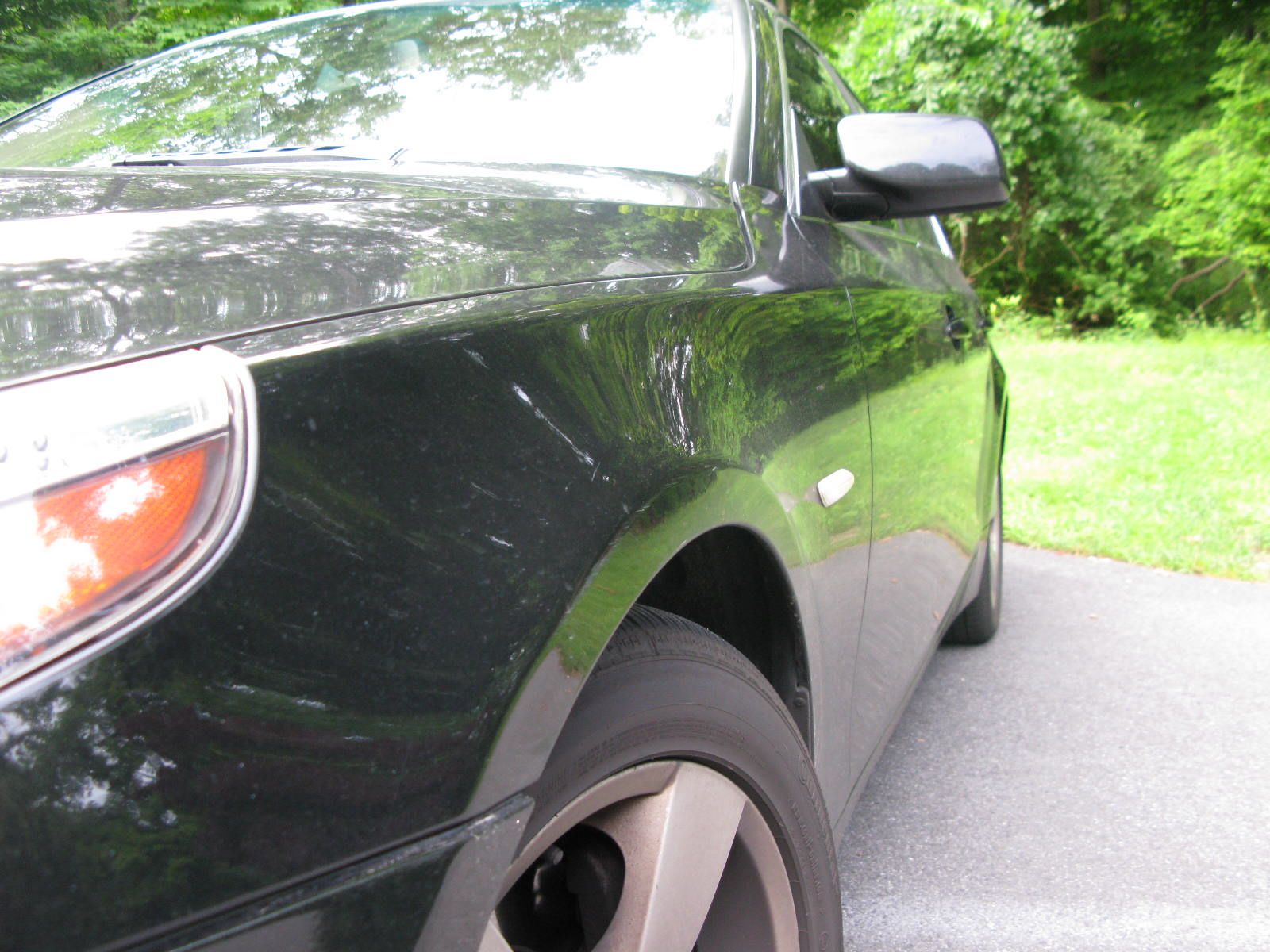
BMW

Photo by Katie Cullinan

Often, while out running errands, a car races past me and others, weaving in and out of traffic. I shake my head, secretly hoping he or she gets pulled over (especially if they drive down the shoulder!). Sometimes, right after this car zooms past me, traffic ahead slows down to a stop. I pull up right behind Mr. Speed Racer. So what did all that racing around accomplish?

On the other hand, I sometimes I end up behind slow cars, who seem to take forever to get where they are going.

There are risks and potential payoffs for both approaches. If you drive fast, you may get to your destination quicker. However, you run the risk of causing an accident, and possibly hurting yourself and others. If you drive slow, it will take longer to get to where you’re going, and you might be late, but you increase the chances of getting there safely.

Let’s extend this metaphor to writing (novels in particular). What is the right speed to write a novel? If you write extremely fast, you may finish your first draft quicker, but the risk is higher that the novel crashes and burns from unfocused sloppy narrative or plot. Writing very fast also only works when there are no barriers (like the traffic stopping unexpectedly). When was the last time you experienced no barriers in your writing (or anything else, for that matter)?

Writing slowly means taking much longer to finish your novel. You will delay the satisfaction of completing the manuscript, and you could possibly lose momentum.

Neither approach is ideal. I think I’ll write as a slightly sporty sedan. Maybe with a convertible top for when I’m feeling daring. I will take a moderate pace, and keep moving. I’ll save speed for those sunny days when a revision cycle is ending- just grammar and logistical cleanups. Then I can take my novel for a spin. By then, I’ll have travelled the route many times. I know it well.

Purity

They are beautiful gems, shining for a brief moment before dimming in the reality of life. They are rare, and transient, and precious. They are pure moments – moments unclouded by opinion, or rhetoric, or worries. They are the moments when time stops, and the wonder of nature and life take your breath away.

I have experienced some of these moments before, so I know they exist. But life hasn’t been quiet enough for a while for me to be open to one. I yearn for just a few minutes where life is quiet down to my soul. Where I can look at the sky, and remind myself of my small (and hopefully meaningful) place in the universe.

Sometimes I feel ungrateful wishing for such things. The noise in my life is often due to children’s songs or requests for more pushes on the swing. Honestly, there are many more annoying and stressful moments, but we won’t linger on those here.

Strawberries

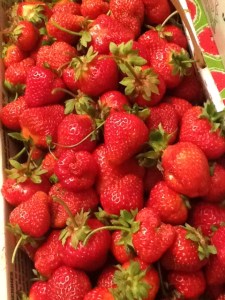
This week, I caught a glimpse of a pure moment riding back from the strawberry fields on the bumping “Berry Ferry.” My kids and I were slick with sweat, covered in hay and dirt. And we were each grinning ear to ear, reveling in the feeling of accomplishment after picking two overflowing boxes of rich, ripe, perfect berries.

I close my eyes now as I think of it, hoping for the mental “click” as I attempt to imprint the memory on my brain.

These moments come rarely – not because they don’t exist, but because the reality of life is too loud. The news, the chores, the responsibilities, the traffic, the things we hate to do but must… it all intrudes. And when do catch a pure moment, like a butterfly on our hand, it doesn’t last long enough. I suppose that’s what makes them so precious and valuable.

Catching some pure moments is on my must-do list for this summer. They help to feed my soul, and my writing. I hope you can pause to find some of your own.

The Music of Life

I’m sure each of us has a personal philosophy about music and its ability to enhance or detract from an experience. Film critics often discuss how a movie soundtrack either elevates or destroys the feeling of a film. Some people would not have gotten through college without some rock and roll in the background, while others preferred the silence of the library.

For me, different situations require different musical support. When I clean my house (which I detest), I play some music from my “Upbeat and Fun” playlist. And I play it loud. It seems to give me a little hop in my step as I wipe the same counters and wash the same floors, week after week. Extra bonus if my kids pop into the kitchen for an impromptu dance party.

When I am writing a first draft, I prefer to write in relative silence. No external distractions to take me away from the getting those thoughts out of my head and onto the page, as quick as possible. When I’m writing this blog, I do have a little wiggle room- not music exactly, but right now the swish of the dishwasher is proving to be quite soothing.

I was always the silent studier- probably because I know that I am easily distracted and I need to actively work to be focused. So it surprised me to find that there is some room for music when I write. Not in my first draft, granted, but during revision.

You may have read on this blog about my second middle grade novel work in progress – it is a time travel story set mostly in 1983. At one point in revising and expanding the story, I got stuck. So I put on some 80’s music for inspiration. And it worked! Many memories of my own experiences in the 80’s came back to me, and I had fun adding lots of vivid details to the story. Who knows if they’ll all make it to the final version, but it should be a more realistic and fun story.

This past week, music proved a happy little accident. I had made revision mark-ups to my first novel, and was sitting at the computer in the kitchen in the evening entering them. And my husband fell asleep in his chair in the next room. And snored. Loudly (sorry for giving up your secret, dear). So I put on my headphones and played some Justin Timberlake and Brian Setzer Orchestra to drown him out. Before I knew it, it was 11 PM and all my revisions were done. Yay!

So whatever part music plays in your daily life – inspiration, cheerleader, soul-soother – make sure to turn it on. Whenever the mood strikes you. And have fun!

Tending to Your “Flowers”

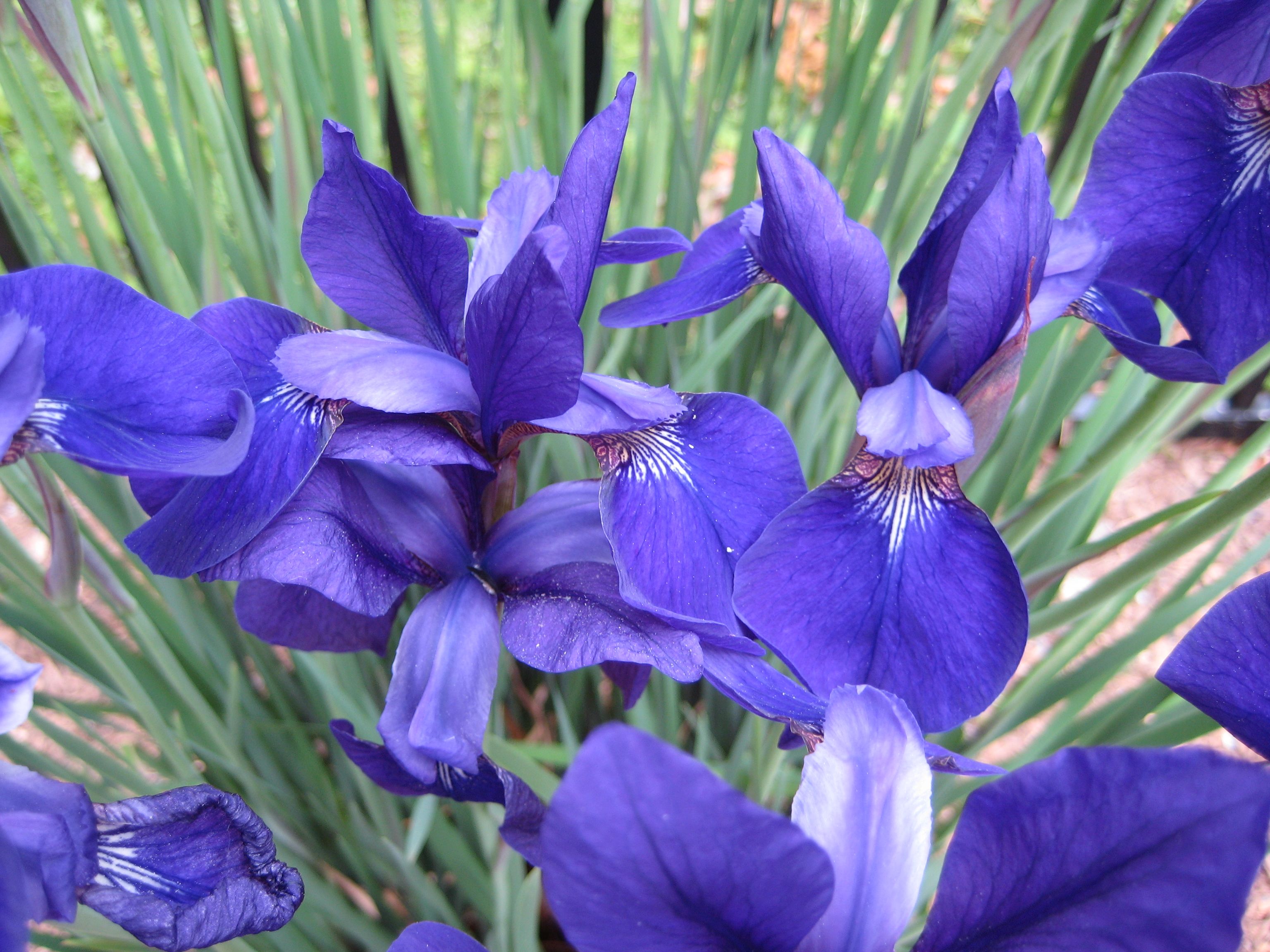
I was working in my yard, tending my planting beds and garden recently, when a metaphor came to mind. Just like gardens, writing needs tending. Irises

My planting beds of flowers and plants, are like my writing craft. It requires a lot of work to establish the beds, giving them a strong beginning. I place landscape fabric down to decrease the amount of weeds that creep in. To make sure my plants are healthy, I refresh their mulch, prune the dead branches, and weed them occasionally. My writing craft needs refreshing too. I take a few courses and workshops each year to learn new skills.  I read writing blogs, and I check in frequently with my critique partner. Chatting with Joanna really helps me identify the good “plants” to keep, and what parts are the “weeds.”

My vegetable garden is like my writing work. Based on past successes with raised-bed gardening, I decided to significantly expand my vegetable garden with a new 12 x 12 foot fenced-in area at a sunny spot at the back of my property. I also wrote two more novel manuscripts this year to add to my works in process. Both need my ongoing care and nurturing if I want to see them bear fruit this year. I’m crossing my fingers for tasty sweet corn and huge tomatoes for making sauce (and an agent, if I’m lucky!)

What this all reminds me is that both plants and writing require regular maintenance and nurturing. Just as I find time each night to water my plants, I need to ensure I making time to continue working on my manuscripts. Perhaps then both will bloom!

Keep on Running, Keep on Running…

Almost 2 weeks ago I ran in my first 5K race on Mother’s Day. It was a great experience, running with almost 1300 other women. There were families all along the race route with signs, cow bells, and lots of cheers. All of the smiling faces spurred me on. On one particular hill, a child held up a sign that said, “This hill is no match for my mom.” Even though the sign was not made specifically for me, it still motivated me not to chicken out as I strained up the hill. If their mom could do it, so could I!

I started running as an attempt to find an exercise that I liked. I really don’t like going to the gym – I find it boring and I don’t see any physical results after going repeatedly. I’m more of a sports gal – swimming, skiing, softball. However, since I have two young children, it’s hard to commit to a league or any regular schedule. So running has provided me with flexibility (if the kids were up too much during the night, I’ll try again to run the next morning), an exercise where I see the physical results, and many other unexpected benefits.

I’ve posted on my experiences with running before. I feel amazing mental clarity during and after running. Whatever chemicals are released in your system when running (adrenaline?) give me a real rush. And once I saw the finish line at my first race, I did what I never thought I would do. I sprinted. I passed four women in my mad dash for the finish line. I made sure my stride came down right on that timing mat (just in case, you know?). And I felt GREAT.

Going across that finish line gave me such a rush, I was replaying the last minute of the race over and over in my mind for days.

So what did I learn from this experience?

  1. Give yourself an aggressive goal and stick with it. Signing up for the 5K made me challenge myself in my weekly running. I didn’t want to make a fool of myself!
  2. Be reasonable and forgiving with yourself. Did I run the whole 5K? No. I walked about 3/10ths of a mile on some tough hills and to catch my breath. But that was okay. I finished my first race at 2-1/2 minutes under my best time. Yahoo!
  3. Take the high of each achievement (big or small), and use to to push on to the next goal. Now I’m pushing myself to see if I can run the whole 3.1 miles without stopping by the end of June. If I can, I’m going to sign up for a local 8K at the beginning of July.
  4. If you don’t meet your goal, try again. I wanted to be done writing the first draft of a new novel by Christmas. Life intervened. But I kept pushing at it, and I’m thrilled that I finished it a few weeks ago. Now I’m revising my first novel, which I’m sure will take a lot longer than I want it to.

So best wishes to each of you as you seek clarity, decide what’s important to you, and determine where you want to be.

racepic4

The Senses of Spring

BaseballSpring is a time of reawakening. New animal babies are born and buds pop out on the trees. I found that it is the time for my senses to reawaken, too.

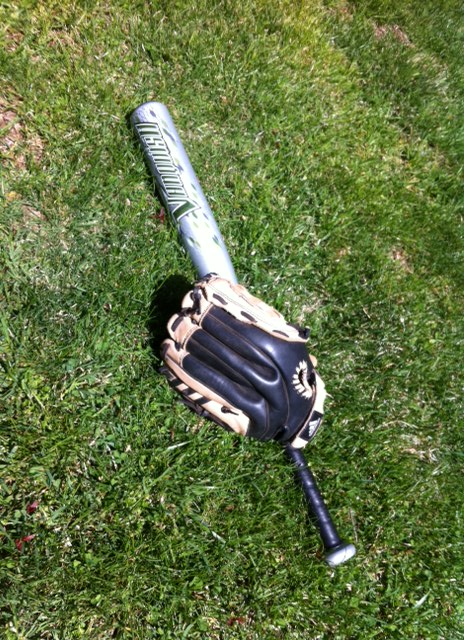
At my son’s first baseball game of the season last night, I was acutely aware of the smell of the freshly cut grass while I watched the boys hold their caps over their hearts for the National Anthem. I could hear the boys laughing from the dugout, and the crack of the wooden bat successfully hitting the ball. My daughter was not watching the game, but was busily digging in the dirt next to the bleachers, bringing me handfuls of craggy, bumpy rocks. And we finished the evening off with a tasty celebratory frozen yogurt.

This inspired my idea for a writer’s exercise, or game to play with your kids (when you can’t possibly play another game of iSpy).

Family Version: At the park, on a car ride, at a sporting event, waiting for the doctor/dentist, taking a nature hike, or anywhere else you might be, challenge your family to describe where they are with all five senses. It may inspire some interesting conversations about WHY the doctor’s waiting room smells like bubble gum.

Writer’s Version: During similar situations as above, or sitting on the porch having a cup of coffee, or people watching at the mall (or wherever else you are), take out your journal and see if you can describe the environment with all five senses. Extra bonus points for the more descriptive and creative you are with your answers. This exercise also works as a “jump starter” for your writing day, or a break exercise when you are stuck while writing. Reflect back on a situation, and see what sensory descriptors you can conjure up. Don’t worry… even if “the smooth stickiness of peanut butter on the roof of my mouth” never makes it into any of your manuscripts, it WILL open your mind to the things that might pass by unnoticed.

Feel free to share your examples and what your senses revealed to you. Happy Spring!

Revisiting the Classics

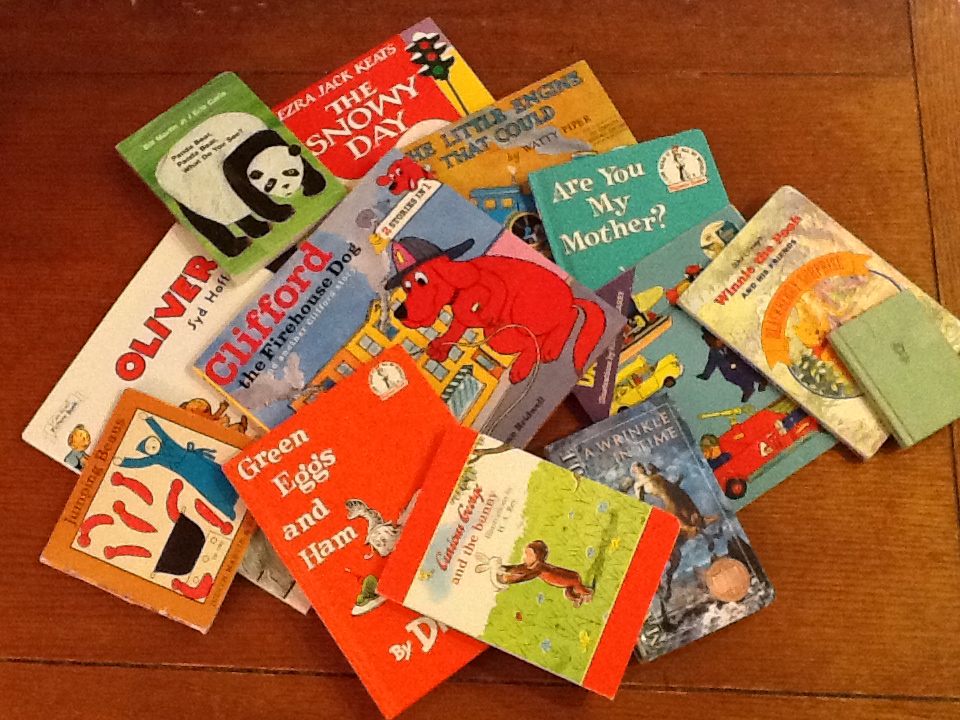
I was reading a message board the other day concerning classic picture books that make you wonder how they ever got published. Part of the discussion centered around how the children’s book market has changed over the years. The approach to children’s education and the state of the children’s book market was quite different seventy, fifty, or even twenty years ago. I wrote a previous blog post on some of the classics, and how they hold up.

Classic Books

What was most interesting to me about this discussion was not the different opinions about why classics are classics, and why some hold up throughout the years, and some do not. What I saw when I read each post was this: Everyone likes something different.

Several specific books were mentioned, especially Madeline. There were some pretty strong opinions on why they loved the book, or not.  Some loved it, some hated it. I myself don’t get the appeal of Madeline. The character strikes me as a spoiled brat who is put into a variety of unrealistic (but not fantasy) situations.

Regardless, I may not like it, but clearly others do. Some people may find several of my favorite books annoying or dated. But we all, as readers (children and adults alike) like something different.

Editors and publishers today may focus primarily on what will sell the most copies. They must analyze and assess the market of today, and what meets the needs of the bookstore, online, and school markets. I don’t envy them the challenge of trying to float a ship on the changing tides of pop culture and educational theory.

As I writer, I have had many arguments with myself (quietly, I promise) about whether to ditch the story I really love in favor of something more commercially viable. As I advance my craft, I strive to create stories that meet both my personal requirements and the needs of the current market.

But I must start at the beginning: writing what is in my heart. Perhaps what I write will be sellable someday (hopefully!). But if I don’t write what is in my heart, I believe it won’t speak the truth or touch my readers in any way. And if everyone likes something different, perhaps instead of trying to speak to everyone, I should strive to speak to someone.

So in the end, whether a story meets the technical requirements of today’s market or not, it must start in a personal place. And that’s good news.  The joy of writing down the stories that are begging me to be written, those that occupy a special place in my heart and mind, are why I write in the first place.

Need a Quick Diversion?

Have you every just needed a moment to escape your thinking? Whether you are writing, or worrying, or trying to puzzle something out, sometimes we need a way to step back and refresh. For me, when I’m mentally stuck or really deep into something that I can’t see the way out of, I try to think about something else. Not procrastinate – just a brief diversion. Just enough to come back a few minutes later with a refreshed perspective. Think of it as a mental spa treatment!

So what’s a good diversion? How about:

  1. Write your grocery list for the next week’s meals
  2. Sit down and do a puzzle with your child/grandchild/friend
  3. Write something. If you are taking a break from your writing, write something else completely different: a poem, a list, or a writing exercise.
  4. Call someone that you really enjoy talking to. If they are not home, leave them a message about why you enjoy talking to them.
  5. Step outside and take a deep breath. Pick some flowers/weeds or go looking for signs of Spring.

Today, let’s try #3. Here’s a writing prompt to try:

In one of my current works in progress, I am writing about a brother and sister who discover a doorway in their secret hideout in the hall closet. It takes them back to 1983. I have fond memories of the 1980’s, so I am thoroughly enjoying writing all of the atmosphere and observations. Not to mention the parachute pants, big hair, and leg warmers.

Think back to a time of fond memories for you. Write a paragraph or list of the things that immediately come to mind about that time. It could be events, things, or people. Try to include all five senses: what did it smell like, what did it look like, what is a taste you remember, what could you feel or touch, what did you hear? Don’t get caught up in writing something formal. You can write this as a list, as a letter to yourself (now or then), or as a stream of consciousness.

The goal is to put yourself in that place and time, just for a few minutes. Just to let your mind take a big “ahhh.”

Then close your words up into your journal, stick them in your wallet, or tuck them in your bag. Put them somewhere for you to find when you need another moment to step away.

What time would you escape to in your mind? Please share with us in the comments!

SCBWI NYC Conference Recap

I was fortunate to spend last Saturday and Sunday in New York at the SCBWI Winter Conference. I returned refreshed, re-energized, and ready to dive back into revision on my novels. I may even have a few new ideas for picture books!

The conference was a combination of keynote speeches, breakout workshops, and networking opportunities. Here are the highlights:

* First Speaker:  Meg Rosoff. I have not read her books, but I am compelled to check them out, after hearing her sassy, hyperbolic, and funny talk entitled, “So When Are You Going to Write a Real Book, You Know, For Adults?”

* Panel Discussion: A helpful and optimistic discussion about the state of the market, what is selling, and how it is selling (traditional publishing, self-publishing, multiple media, etc.)

* Breakout Sessions: We each participated in two breakout sessions with editors and art directors on what “hooks” them. I chose sessions with editors Yolanda Scott of Charlesbridge, and Francoise Bui of Delacorte Press. Both were insightful, giving examples of books they loved that they had edited that demonstrated the different components that hooked them. I was thrilled to discover Jane Yolen sitting in the row in front of me in the first session.

* Day 2 Keynote: Margaret Peterson Haddix gave a talk entitled “Tell Me a Story.” She wove together personal stories with tips on how to tell a good story. She told us that “books help kids understand and make sense of the world.” Our important role as children’s writers in the tender early development years of life was a common thread among many of the speakers.

* Second Keynote: Julie Andrews and her daughter Emma Walton Hamilton shared their learnings from writing several series (the Dumpy series, the Little Bo series, and The Very Fairy Princess series) together. It was a multilayered talk, and Julie Andrews was everything you would expect: graceful, classy, beautiful, and talented. I was pleased to see what a wonderful relationship mother and daughter have, and how their many years of writing together transcends the typical “celebrity” children’s book writing one might expect.

* Closing Keynote: Mo Willems had me in stitches from the moment he walked on the stage. I expected him to be funny (in a clean, child’s sort of way), but he was humorous in a real, adult way. He spoke directly to us as writers, and shared his take on the profession. He did, however, tell us that if we agreed with everything he said, something was wrong. Some key quotes from Mo:

“Be a filter, not a spigot.”

“Think OF your audience, not FOR your audience.”

“The hook is not the story.”

On writing humor: “Keep writing, then take away whatever isn’t funny. If nothing is left, start over.”

“Childhood sucks, so your job is to be some child’s best friend.”

Joanna and I both love to “collect” rejection stories of successful writers… probably to inspire us to keep going. For Mo, he shared that over a 90 day period in his writing career, he got a rejection letter every day. Yes, 90 rejection letters. And look at him now!

Overall, it was a good conference, full of learnings and ideas. At the end of the conference I participated in the autograph party. I had an amazing opportunity to have 2 books autographed for my children: We Are In a Book! signed by Mom Willems (with a little piggie adorably drawn above his name) and The Very Fairy Princess Follows Her Heart signed by Julie Andrews and Emma Walton Hamilton.

Not only was I able to obtain two great keepsakes for years to come, I was able to talk briefly with each of them. I had the opportunity to thank Mo Willems for his Elephant and Piggie Books, since they are the reason my son (an initial reluctant reader) now loves to read. I told Julie Andrews and Emma Walton Hamilton that my daughter thinks she is a princess like their character Gerry. Truth be told, I could have talked to Julie Andrews about the weather, and I would have been perfectly happy. She and her daughter were just lovely.

For more information on the conference, check out the SCBWI Blog.
NaNoWriMo… 2 Months Later

National Novel Writing Month (NaNoWriMo) was in November, and you may remember that the goal is to write a 50,000 word novel during between November 1st and November 30th. I boldly (or insanely, depending on how you look at it) took on the challenge.

Since I typically write picture books and middle grade novels, I adapted the challenge for my needs. My goal was to write two middle grade novels in November, totaling 50,000 words.

So how did it go?

I finished the first draft of one brand new novel, about a brother and sister who discover a portal in their hall closet that takes them to 1983. It was quite fun to write, since the girl in the story is 10 years old, and I was 10 years old in 1983. (Go ahead, do the math. I dare you.) I really enjoyed adding in many references to 80’s hair band music, parachute pants, big hair, the Atari and other “new technology”. I’m sure some of it will end up being removed in revision, but I enjoyed it just the same.

So, one novel draft down. Check! Unfortunately, this first novel came in well under 25,000 words. So I wasn’t at the halfway point yet. Sigh.

This was when I decided to ignore the word count, and write until I was done. Good plan right? I began writing the second novel, a continuation of another novel I have in revision. In this draft, a 13-year old girl travels with her dad for two weeks as he completes his cross-country truck driving job, hoping to experience “the world,” and become a better writer.

I got a good start on this second novel, and then life got in the way: birthdays, Thanksgiving, family visits, etc… all wonderful things that ended up putting a halt on my writing progress.

So in the end, I did not meet the 50,000 word goal. And I’m okay with that. I now have 2 novels to revise, and one to finish writing the first draft. The draft is just bursting to get out of my head, so I just have to make the time to finish it.

Perhaps this will be the year of the novel for me. Wouldn’t it be a great year if I could start it in revision, and end it with an agent? Let’s cross our fingers.