The Senses of Spring

BaseballSpring is a time of reawakening. New animal babies are born and buds pop out on the trees. I found that it is the time for my senses to reawaken, too.

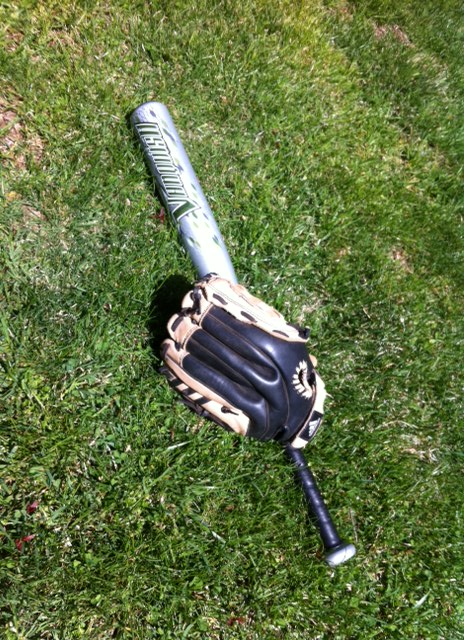
At my son’s first baseball game of the season last night, I was acutely aware of the smell of the freshly cut grass while I watched the boys hold their caps over their hearts for the National Anthem. I could hear the boys laughing from the dugout, and the crack of the wooden bat successfully hitting the ball. My daughter was not watching the game, but was busily digging in the dirt next to the bleachers, bringing me handfuls of craggy, bumpy rocks. And we finished the evening off with a tasty celebratory frozen yogurt.

This inspired my idea for a writer’s exercise, or game to play with your kids (when you can’t possibly play another game of iSpy).

Family Version: At the park, on a car ride, at a sporting event, waiting for the doctor/dentist, taking a nature hike, or anywhere else you might be, challenge your family to describe where they are with all five senses. It may inspire some interesting conversations about WHY the doctor’s waiting room smells like bubble gum.

Writer’s Version: During similar situations as above, or sitting on the porch having a cup of coffee, or people watching at the mall (or wherever else you are), take out your journal and see if you can describe the environment with all five senses. Extra bonus points for the more descriptive and creative you are with your answers. This exercise also works as a “jump starter” for your writing day, or a break exercise when you are stuck while writing. Reflect back on a situation, and see what sensory descriptors you can conjure up. Don’t worry… even if “the smooth stickiness of peanut butter on the roof of my mouth” never makes it into any of your manuscripts, it WILL open your mind to the things that might pass by unnoticed.

Feel free to share your examples and what your senses revealed to you. Happy Spring!

Through the Eyes of Children

I spent this week on the dream vacation of most American children. My family and I travelled to Florida, went to the beach, spent 2 days at Disneyworld, and stayed at a fun hotel with waterslides and a pool. Between the hotel and Disneyworld, a parent could have felt overwhelmed with all the characters, from princesses to Mickey Mouse to Teenage Mutant Ninja Turtles. It could really feel over-commercialized.

While my children loved meeting their favorite characters, what we really enjoyed was being surrounded by stories. There were stories everywhere, behind each of the rides and experiences. We immersed ourselves in Pooh’s Hundred Acre Wood. We flew on a Rebel Spy mission past the Death Star and back to base. My son was chosen to play the Beast in a special story with Belle. We even made some of our own memories and stories to share for years to come.

This trip has reminded me of the stories behind the places we experience everyday- both fantastical and ordinary. And it reminded me why I (and many of you) write for children: for the chance to give a child joy and laughter, and to help them dream.

Lights, Camera, Action!

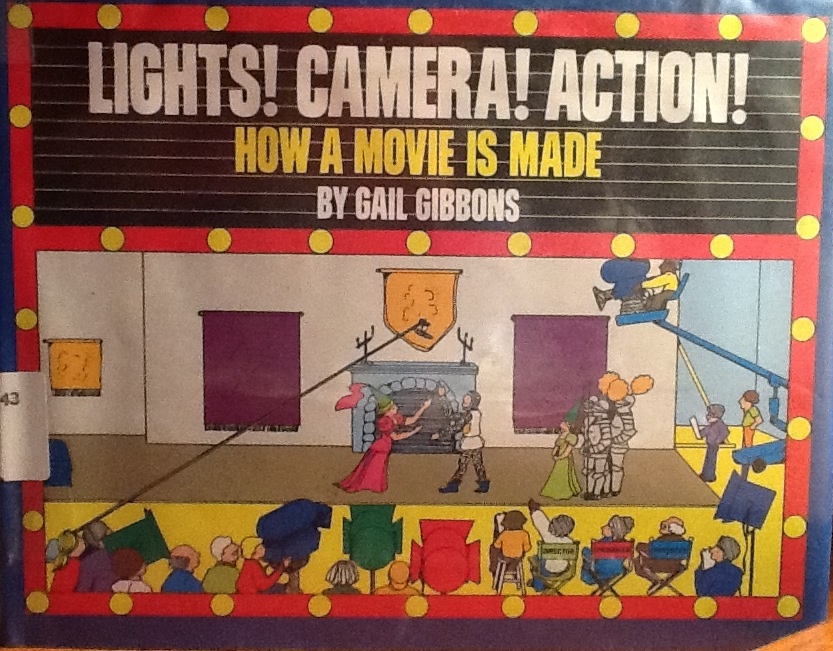
ImageLights! Camera! Action! How a Movie is Made

Written and Illustrated By: Gail Gibbons

Thomas Y. Crowell Publishing House, 1985, Hardcover

Target Audience: Ages 6-9

Genre: Non-Fiction

How We Discovered This Book:

My son is very interested in how movies and television is made. Some of this probably stems from the natural process of learning what is real, and what is not. However, he takes a distinct interest in “peeling back the curtain” and figuring out how things are accomplished. We have watched videos on movie makeup, special effects, puppetry, and techniques like green screens and stop motion animation, but I was in search of a good book to explain the big picture of making movies and television.

What I Liked About This Book:

Even though this book was published almost 30 years ago, it covers the broad process in such a way that it does not feel outdated. The whole process is covered from the writing of the script all the way to opening night. We get to see all of the preparation involved, and the many people needed to make a movie.

What Did My Son Aidan Think?

He enjoyed this book much better than several others we read, which were way too general or outdated. This book seemed to have just the right amount of detail without getting bogged down in it. After reading this book, my son wants to learn more. Any suggestions on this topic? I have my eye on a Klutz book on stop-motion animation, but I’d love any suggestions for picture books.

Resources:

Teaching Resources: This site has TONS of ideas for teaching kids about television and movies.

Write Your Own Activity Script: This site walks you through how to write a script with kids, and then mount a production. They base the script on Jon Sciezka’s The True Story of the Three Little Pigs, so it sounds extra fun.

Revisiting the Classics

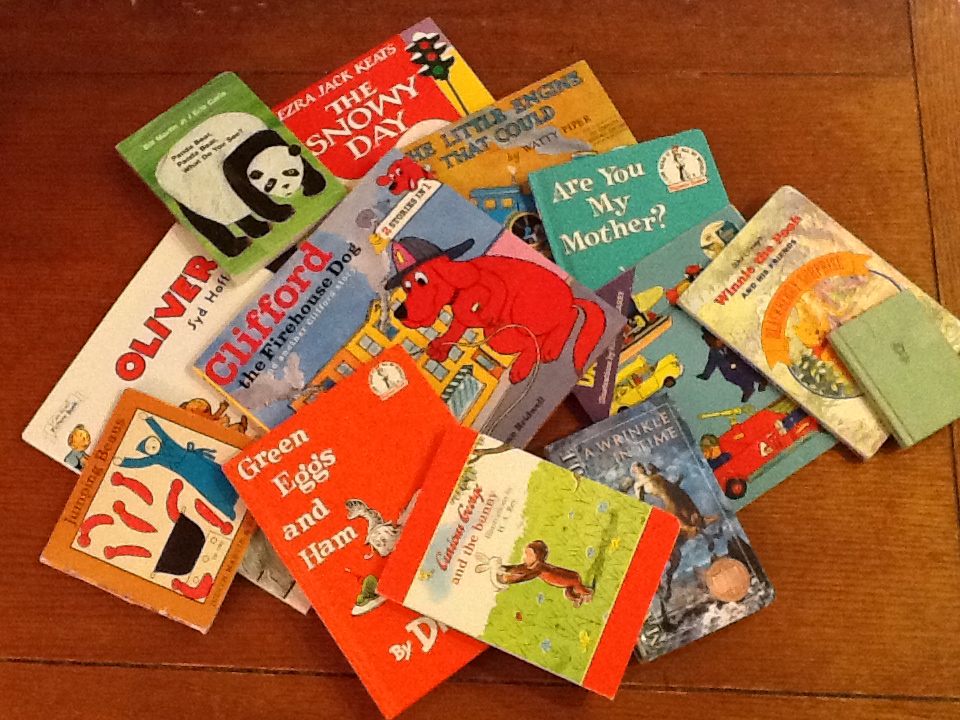
I was reading a message board the other day concerning classic picture books that make you wonder how they ever got published. Part of the discussion centered around how the children’s book market has changed over the years. The approach to children’s education and the state of the children’s book market was quite different seventy, fifty, or even twenty years ago. I wrote a previous blog post on some of the classics, and how they hold up.

Classic Books

What was most interesting to me about this discussion was not the different opinions about why classics are classics, and why some hold up throughout the years, and some do not. What I saw when I read each post was this: Everyone likes something different.

Several specific books were mentioned, especially Madeline. There were some pretty strong opinions on why they loved the book, or not.  Some loved it, some hated it. I myself don’t get the appeal of Madeline. The character strikes me as a spoiled brat who is put into a variety of unrealistic (but not fantasy) situations.

Regardless, I may not like it, but clearly others do. Some people may find several of my favorite books annoying or dated. But we all, as readers (children and adults alike) like something different.

Editors and publishers today may focus primarily on what will sell the most copies. They must analyze and assess the market of today, and what meets the needs of the bookstore, online, and school markets. I don’t envy them the challenge of trying to float a ship on the changing tides of pop culture and educational theory.

As I writer, I have had many arguments with myself (quietly, I promise) about whether to ditch the story I really love in favor of something more commercially viable. As I advance my craft, I strive to create stories that meet both my personal requirements and the needs of the current market.

But I must start at the beginning: writing what is in my heart. Perhaps what I write will be sellable someday (hopefully!). But if I don’t write what is in my heart, I believe it won’t speak the truth or touch my readers in any way. And if everyone likes something different, perhaps instead of trying to speak to everyone, I should strive to speak to someone.

So in the end, whether a story meets the technical requirements of today’s market or not, it must start in a personal place. And that’s good news.  The joy of writing down the stories that are begging me to be written, those that occupy a special place in my heart and mind, are why I write in the first place.

Need a Quick Diversion?

Have you every just needed a moment to escape your thinking? Whether you are writing, or worrying, or trying to puzzle something out, sometimes we need a way to step back and refresh. For me, when I’m mentally stuck or really deep into something that I can’t see the way out of, I try to think about something else. Not procrastinate – just a brief diversion. Just enough to come back a few minutes later with a refreshed perspective. Think of it as a mental spa treatment!

So what’s a good diversion? How about:

  1. Write your grocery list for the next week’s meals
  2. Sit down and do a puzzle with your child/grandchild/friend
  3. Write something. If you are taking a break from your writing, write something else completely different: a poem, a list, or a writing exercise.
  4. Call someone that you really enjoy talking to. If they are not home, leave them a message about why you enjoy talking to them.
  5. Step outside and take a deep breath. Pick some flowers/weeds or go looking for signs of Spring.

Today, let’s try #3. Here’s a writing prompt to try:

In one of my current works in progress, I am writing about a brother and sister who discover a doorway in their secret hideout in the hall closet. It takes them back to 1983. I have fond memories of the 1980’s, so I am thoroughly enjoying writing all of the atmosphere and observations. Not to mention the parachute pants, big hair, and leg warmers.

Think back to a time of fond memories for you. Write a paragraph or list of the things that immediately come to mind about that time. It could be events, things, or people. Try to include all five senses: what did it smell like, what did it look like, what is a taste you remember, what could you feel or touch, what did you hear? Don’t get caught up in writing something formal. You can write this as a list, as a letter to yourself (now or then), or as a stream of consciousness.

The goal is to put yourself in that place and time, just for a few minutes. Just to let your mind take a big “ahhh.”

Then close your words up into your journal, stick them in your wallet, or tuck them in your bag. Put them somewhere for you to find when you need another moment to step away.

What time would you escape to in your mind? Please share with us in the comments!

Review: Race You to Bed

Race You to Bed

Race You to Bed

Written and Illustrated By: Bob Shea

Katherine Tegen Books, 2010, Hardcover Version

Target Audience: Ages 4-7

Genre: Fiction

How We Discovered This Book

We found this at our local bookstore, and fell in love with the bunny main character.

Summary

A fuzzy bunny races the reader to bed – running, on a boat, on a plane. All in charming rhyme.

What I Liked

The text is fun to read aloud for adults and kids, using nontraditional rhyme. The main character is drawn with big feet and fuzzy all over, which makes him visually interesting. Each page is a surprise to see what he’s going to do next.

What Did My Son Aidan Think?

Both my son and my daughter love this book. It is in frequent bedtime rotation at our house. Unfortunately, it does not make them hurry off to bed. Our favorite part is a personal one. At one point in the story, the bunny comes across his Uncle Ted. My kids also have an Uncle Ted, who  is a snappy dresser himself.Race You to Bed

Resources

If you enjoy this book too, and would like have more fun with it, here are some ideas to supplement the story:

– Which Version is Your Favorite? Read the book to your favorite child reader with your best bunny voice, and then challenge them to read it creating their own voice. You can even check out a video version made by Bob Shea. Then vote on which one was your favorite.

– The bunny has to overcome many obstacles to make it to bed. Talk about what obstacles they might have in their day. Or even what gets in their way as they get ready for bed.

Peace and Clarity

Last fall, I took up running. I need to exercise regularly (and I hate the gym), and I was inspired by all of the amazing athletes at the Olympics.

I was considering swimming or running, but running seemed like it would be easier to stick with, since I would just have to go out my front door instead of dragging myself across town to a pool. On my brother’s advice, I had my feet tested and purchased some specific sneakers to address some earlier problems with my knees and shins. And began running.

The inspiring view when I run

The inspiring view when I run

Then winter came. I didn’t want to run for a variety of reasons:

A. It was too cold here in the Northeast where I live.

B. I run early in the morning, and in the winter it is completely dark.

C. The other neighborhood runners advised me to carry pepper spray, a stick, or a billy club in case I came across a coyote, who are out in my area early in the morning (seriously?).

D. I would rather stay under my cozy duvet for an extra half hour (even with two kids and one husband sharing it) than brave all of the above.

So instead, I exercised with our Wii Fit, which at least helped me burn some calories. But I wasn’t getting my heart rate up as high, and I missed the time to myself in the morning (my kids like to “exercise” with me when I use the Wii).

I missed it so much, that this morning, with the winter waning, the sun rising earlier, and the temperature about 10 degrees warmer, I braved the elements. And it was wonderful.

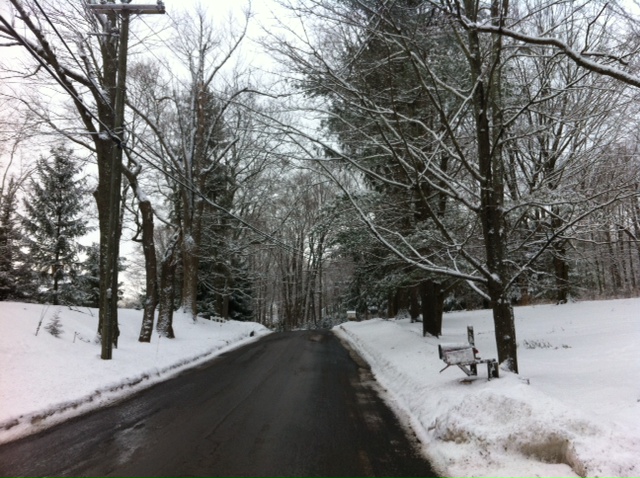
My mind easily focused on one element at a time. Fresh snow on the ground and clinging to the trees. The absence of cars or chainsaws or snowblowers. The crunch of my sneakers. The wind blowing past my ears. My heart beating. And my mind was completely, utterly, and amazingly clear.

I took a deep breath and smiled. My husband didn’t even have to ask if it was a good run when I got home – he could see it on my face.

Do you think they could see me coming?

Do you think they could see me coming?

What do you do to step back and gain clarity in the craziness of daily life? Please share in the comments!

SCBWI NYC Conference Recap

I was fortunate to spend last Saturday and Sunday in New York at the SCBWI Winter Conference. I returned refreshed, re-energized, and ready to dive back into revision on my novels. I may even have a few new ideas for picture books!

The conference was a combination of keynote speeches, breakout workshops, and networking opportunities. Here are the highlights:

* First Speaker:  Meg Rosoff. I have not read her books, but I am compelled to check them out, after hearing her sassy, hyperbolic, and funny talk entitled, “So When Are You Going to Write a Real Book, You Know, For Adults?”

* Panel Discussion: A helpful and optimistic discussion about the state of the market, what is selling, and how it is selling (traditional publishing, self-publishing, multiple media, etc.)

* Breakout Sessions: We each participated in two breakout sessions with editors and art directors on what “hooks” them. I chose sessions with editors Yolanda Scott of Charlesbridge, and Francoise Bui of Delacorte Press. Both were insightful, giving examples of books they loved that they had edited that demonstrated the different components that hooked them. I was thrilled to discover Jane Yolen sitting in the row in front of me in the first session.

* Day 2 Keynote: Margaret Peterson Haddix gave a talk entitled “Tell Me a Story.” She wove together personal stories with tips on how to tell a good story. She told us that “books help kids understand and make sense of the world.” Our important role as children’s writers in the tender early development years of life was a common thread among many of the speakers.

* Second Keynote: Julie Andrews and her daughter Emma Walton Hamilton shared their learnings from writing several series (the Dumpy series, the Little Bo series, and The Very Fairy Princess series) together. It was a multilayered talk, and Julie Andrews was everything you would expect: graceful, classy, beautiful, and talented. I was pleased to see what a wonderful relationship mother and daughter have, and how their many years of writing together transcends the typical “celebrity” children’s book writing one might expect.

* Closing Keynote: Mo Willems had me in stitches from the moment he walked on the stage. I expected him to be funny (in a clean, child’s sort of way), but he was humorous in a real, adult way. He spoke directly to us as writers, and shared his take on the profession. He did, however, tell us that if we agreed with everything he said, something was wrong. Some key quotes from Mo:

“Be a filter, not a spigot.”

“Think OF your audience, not FOR your audience.”

“The hook is not the story.”

On writing humor: “Keep writing, then take away whatever isn’t funny. If nothing is left, start over.”

“Childhood sucks, so your job is to be some child’s best friend.”

Joanna and I both love to “collect” rejection stories of successful writers… probably to inspire us to keep going. For Mo, he shared that over a 90 day period in his writing career, he got a rejection letter every day. Yes, 90 rejection letters. And look at him now!

Overall, it was a good conference, full of learnings and ideas. At the end of the conference I participated in the autograph party. I had an amazing opportunity to have 2 books autographed for my children: We Are In a Book! signed by Mom Willems (with a little piggie adorably drawn above his name) and The Very Fairy Princess Follows Her Heart signed by Julie Andrews and Emma Walton Hamilton.

Not only was I able to obtain two great keepsakes for years to come, I was able to talk briefly with each of them. I had the opportunity to thank Mo Willems for his Elephant and Piggie Books, since they are the reason my son (an initial reluctant reader) now loves to read. I told Julie Andrews and Emma Walton Hamilton that my daughter thinks she is a princess like their character Gerry. Truth be told, I could have talked to Julie Andrews about the weather, and I would have been perfectly happy. She and her daughter were just lovely.

For more information on the conference, check out the SCBWI Blog.
Caldecott and Newbery Winners announced

This past Monday, two of the premier awards for children’s books were announced: the Caldecott and Newbery Medals. The Caldecott is awarded annually for distinction in picture book illustration. The Newbery is awarded for distinction in children’s book writing. You can learn more on the American Library Association’s website.

This year’s winners include:

Caldecott Medal: This Is Not My Hat, illustrated and written by Jon Klassen

Caldecott Honors:

  • Creepy Carrots!, illustrated by Peter Brown, written by Aaron Reynolds
  • Extra Yarn, illustrated by Jon Klassen, written by Mac Barnett
  • Green, illustrated by Laura Vaccaro Seeger
  • One Cool Friend, illustrated by David Small, written by Toni Buzzeo
  • Sleep Like a Tiger, illustrated by Pamela Zagarenski, written by Mary Logue

Newbery Medal: The One and Only Ivan, written by Katherine Applegate

Newbery Honors:

Congratulations to all of the winners! Looks like this is an extra good year for Jon Klassen.

So my mission today was to venture into the smallish Barnes and Noble in my town with my daughter, and spend some time looking through the books listed above. The only two I have read previously are Extra Yarn, and One Cool Friend (which we own). Unfortunately, my bookstore had NONE of these award winners. Very disappointing. I could go on and on how our Barnes and Noble needs to move into the space vacated by Borders so that it can have a proper selection, cafe, and places to sit… but that could be a whole post in itself.

So I will have to share my impressions on these books at a later time. I can tell you that both Extra Yarn (a tale about a girl who finds a magic box of yarn and proceeds to knit sweaters for everyone and everything) and One Cool Friend (about a boy who sneaks a penguin home from the aquarium in his backpack) are lovely, and are made even more charming by their illustrations.

Tomorrow I’m off to the winter conference of the Society of Children’s Book Writers and Illustrators (SCBWI), and I should have much to tell when I get back. Have a great weekend!