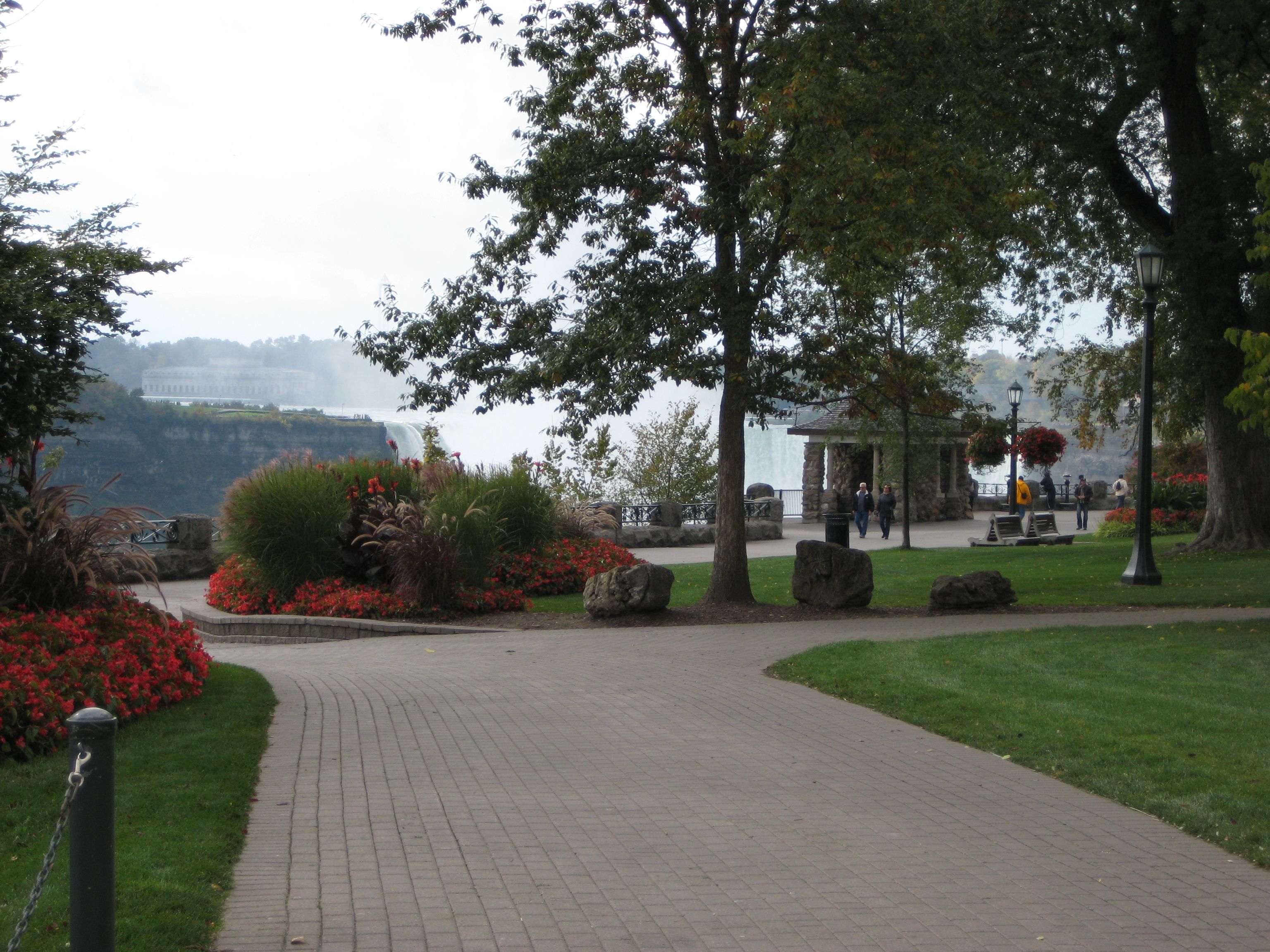
Spring Cleaning

Photo by Katie Cullinan

Here on the East Coast, Spring brings with it colorful flowers, warmer breezes, and the return of birds and frogs. For me, I look forward to Spring for all of those reasons. But what I really think about during the long winter months is Spring Cleaning (no, I’m not crazy).

I dream of opening all of my windows, cleaning off the accumulated dirt and grime, and letting the sun shine in. There is something about brushing down the cobwebs and wiping off my baseboards that I find relaxing and almost meditative. It gives me time to pause and reflect. I can clear my mind.

When my mind is clear and unencumbered with daily tasks is when the best ideas float in. Those stories that have been churning in the back of my mind, and the characters figuring out what they want to say, finally strain to get out.

Last month, during a week of particular clarity (and in the middle of purging my children’s unused toys) I wrote two picture books. They were just ready to be written.

So how to you clear your mind of your mental cobwebs and start new work (or restart stalled work)?

I’m off to find something else that needs cleaning. Or to plant some lettuce in my vegetable garden. Anything for some quiet time. I have 29 ideas left from last November’s Picture Book Idea Month (PiBoIdMo) to work on, after all.

Photo by Katie Cullinan

Without Pen and Paper

I recently read that the writing process takes place all the time, not just in front of a computer or with pen in hand. And of course, I wondered if this was true for me. I covet my time with a notebook or at the keyboard, because that is when the ideas get recorded and fleshed out. And I’d gripe about all the time I wanted to spend that way but couldn’t because life — parenting, cooking, etc. — kept getting in the way. But the more I thought about it, the more I realized that I am often writing without any physical tools.

On a recent trip to Southern Utah, a completely new idea came to me while I was hiking. Looking back, I can’t even recall what ignited the spark of this story. Regardless, the idea spun around in my head while we are hiking desert trails and making s’mores and driving across the open, stark country. Today is Paul Theroux’s birthday; he is a well-known travel writer. He said, and I’m paraphrasing here, that writers should leave home in order to write. I think he was implying that travel allowed writers an escape from the pressures of writing (representation, finances, publication, etc.) but I also think that travel can help spark new ideas, even when a writer isn’t looking for one. And there I was, hiking through slot canyons with my toddler, ruminating on this new idea, feeling the characters come to life, testing out the voice, and realizing all the nuance this story would require.

Rumination is a good word for it. Because I am chewing and rechewing an idea to test its viability (in my eyes, of course). Each time I revisit it, some new twist or realization comes with it, and it becomes increasingly digestible as a story. Okay, enough with the ruminant metaphor.

The point is that knowing that the writing process is ongoing, can occur without a computer, has freed me from the trap of not having enough time. Of course, I’ll never have enough time to write. I always seem to want more, especially as more  and more ideas form in my head. But I can work on them anytime — in the car, on a bike ride, at the grocery store. This flexibility becomes crucial at some point, because then when I come back to the keyboard or pen, the ideas flow freely and I spend considerably less time staring at the pushpin holes scarring the wall. And truthfully, few of my stories have come to me while I was sitting at the computer. Most have come while I was doing something else, forcing me to silently repeat the plot or opening lines so that I wouldn’t forget them before getting to a computer.

Do you write in your head or do you pull from your subconscious while typing away? How does time away from your life — through travel — affect your writing?

A Different Path

When I was younger, I loved doing anything creative. I took black and white photographs with my father. I sang; I danced; I acted. I sat in front of my neighbors’ houses sketching their facades. I even wrote lovelorn poetry for my high school literary magazine.

Then came time to decide what I wanted to be when I grew up. After much consideration, I had two contenders: study musical theater, or architecture. In the end, the practical side of me won out. An architect has a better chance of getting a steady job, and I couldn’t picture myself waiting tables in between acting gigs.

So I chose a great university (The Catholic University of America) in a great town (Washington, DC) and I jumped in with both feet. I studied hard, joined the choir, got involved in student government, and soaked up all the culture DC has to offer.

But I had a problem. I had always been an A student, but I was earning Bs and Cs in my Architecture Design Studio courses. What was wrong? I was designing practical buildings, giving myself practice at what I thought I would build when I graduated. Those of my classmates who designed completely creatively with no sense of practicality got As (the long-haired guy who got top grades for his commercial building based on a banana, you shall remain nameless).

So in the summer between my Junior and Senior years, I made a decision to approach the construction field from a different angle: business management. I finished my architecture degree, and then an MBA.

Diploma in hand, I began interviewing. I was sure that with my combination of architecture and business management education, I would be a hot commodity. Who would be lucky enough to snap me up first? As it turns out, there would be no scramble for my services. I soon learned that architecture and construction firms promoted from within; partners and business managers worked for many years as apprentice architects, then full architects, then senior architects, then management. I really didn’t want to wait years to use my skills.

Fast forward twelve years later, and I had leveraged my business background into a successful career in Human Resources. I was employed by a large multi-national corporation, with exciting assignments working with employees, managers, and executives to help the business be successful. I even got to work on large acquisitions and mergers. I received honors, praise, and plum assignments. I was at the top of my game. But I was weary, and empty. There was not an ounce of creativity left in my life.

So when the company went through yet another reorganization, I took the opportunity to leave and start over. It allowed me to finally get pregnant with child #2 (our beautiful daughter), and take stock of my life.

I asked myself: what did I always dream of doing? What did I want to try before it was too late, so that I could live a life of minimal regret?

I quickly discovered that my short-list of dream jobs were full of fun, creativity, and imagination. And not very much practicality. But that’s what dreams are for, right?

With support from my family, I am actively pursuing two of those dreams: writing children’s books, and puppeteering. And I couldn’t be happier. I get to do what I love every day, along with a dream my husband and I share: to personally and actively raise two well-adjusted, loving children.

So, would I do it all again, with what I know now? Yes. Everything I have experienced and learned has informed my character.

I took a different path, and then looked up to find that I had mis-read the signs. Stepping off this road to forge my own path through the underbrush has confirmed my passion for a creative life. I am blessed to be walking this new path with those who love me, supporting me no matter which turn I take.

Why I Write

Many writers these days reveal that writing was their childhood dream. I always wanted to be a writer. That’s not true for me, at least I have no distinct memory of it. I wanted to be a park ranger or maybe a surgeon. Let’s skip the surgical dream, since it never came true. But I did become an interpretive park ranger in Yosemite National Park, and recently I’ve noticed how similar that job is to the one I’m aspiring to now. I found a thought provoking quote from science fiction writer Brian Aldiss that helped me see the connection between my two lives.

There are two kinds of writer: those that make you think, and those that make you wonder.

– Brian Aldiss

In my previous career as an interpretive ranger, my goal was to make people think and to make them wonder. Connecting people to the cultural and natural history of national parks meant asking people to reflect on what it means to be human, how humans fit into the bigger world around us, and just how remarkable that world is. When I was a ranger, visitors joined my walks or snuggled close to my campfires, to hear what I had to say about the park. The commitment on their part was short–maybe an hour or two. Mostly, I addressed a choir of already loyal nature lovers and park supporters (you know who you are). And hopefully, they came away thinking and wondering, or at least having enjoyed a good crepuscular howl at the moon.

As a writer, I strive for the same goal. But the parameters are different.  Rather than using inspirational scenery to draw people in, I must develop abstract landscapes through the written word. It’s a different experience, and in many ways significantly more difficult, than my previous work. In Yosemite, I relied on an existing history, raw material if you will, to draw inspiration from and only had to find the magic within the material before me–cultural stories and natural events–in order to pull people in and inspire them. Now, I spend time crafting an entirely new world–even if the story has a contemporary setting. Most days I’m writing at the computer and very often in my head, mulling over scenes and characters and storylines, and I spend an awful lot of time staring at certain points on my wall in search of inspiration. How I miss the glorious days of a life spent outside! But I love the process of pulling something out of nothing, or at least out of less. And, of course, I love seeing how close I can come to inspiring reflection and wonder with my writing.

Come to think of it, I read books for the same reasons. To think and wonder.

Why do you?

While you consider this, I’m going outside. My new work-in-progress, Momentum, is a based in a ski town. The snow is melting fast and I could use a bit more snowy inspiration. Guess I’m not stuck inside or without raw material after all.

-Joanna