Telling a Good Story

In addition to reading and writing, I also love to watch movies. I enjoy many different types of movies, but I have the best experience with movies when I can watch them with my husband. He prefers action and suspense movies (with a little horror or questionable 70’s movie thrown in) and I prefer intelligent comedies and independent films (with a little romance or animated movie thrown in).

Often it is difficult for us to agree on a movie to watch. Most of the time, we take turns choosing the movie. He is willing to try my recommendations from Filmspotting, the movie podcast I listen to. I am willing to try the movies that peak his interest after searching the OnDemand or Netflix listings.

So as you can imagine, some movies I like, some he likes, some neither of us like, and some we both like. For the movies that we both like, the commonality seems to be one thing: a good story. And how do we appreciate a good story? Good storytelling.

Whether it be movies or books, what engages me most is how the story is told. Is it suspenseful? Is it funny? Are there engaging characters? Does it show me a compelling situation/location/condition that I have never seen? Or does it resonate within me… something I have experienced myself?

So assuming the critical elements are there to capture my interest, the next key is to KEEP my interest. The story needs to keep me engaged throughout. After all, I do have the option to turn it off (or walk out of the theater) at any time. The often short attention span of a viewer demands that something happen. Frequently.

Cover of

Cover of Meet the Robinsons

Follow all that? Let me use one of my family’s favorite movies as an example. Meet the Robinsons (2007) is on frequent rotation in our house. It is the story of Cornelius (or Lewis, as he prefers), an orphan with a brilliant mind. IMDB describes the story as:

Lewis is a brilliant inventor who meets mysterious stranger named Wilbur Robinson, whisking Lewis away in a time machine and together they team up to track down Bowler Hat Guy in a showdown that ends with an unexpected twist of fate.

So what makes the telling of this story so interesting? With a close look, the elements of the story are clear. Lewis wants to be a part of a family. Everything else in the story drives towards that. His creativity and inventing brings him closer to finding a family that is the right fit for him. He is challenged to fix a time machine to save the day, gaining confidence in himself. Lewis is forced to confront the Bowler Hat Guy and the role he has played in his life. All of these actions happen to drive the story forward.

As writers, we can look for examples of excellent storytelling all around us. Great stories told well can be found in movies, in books, in short stories, even in the family tales told by Aunt Eleanor every year at Thanksgiving.

For more thoughts on storytelling and pacing, check out this article about how Pixar approaches the development of its stories.

What captures you when hearing/reading/watching a story? What makes you want to hear/read/watch them again and again?

The Journey

As a stay-at-home mom who moonlights as a writer, I’ve experimented with various ways to make time to write. I’ve managed over two years to write three and a half novel-length manuscripts and three picture books. When I look at it that way, I have to say I’m proud. But here’s the disclaimer, in the form of a question:

How was the journey?

I’m sure you’ve heard the quip “It’s not the journey—it’s the destination.” And I’m guessing you’ll agree that when you’re looking for a paycheck, the destination becomes a little more important. Though I’ve yet to receive compensation for anything I’ve written, I’m right there with you.

But I’ve had a couple of experiences where the journey was so rocky I just about stopped writing altogether. A few months back, I spread myself too thin by, among other things, working on three manuscripts at once—two in revision and one first draft. I was extremely excited about each project, but my head was spinning with all the plot strands to rework, characters to make more dimensional, and endings to tighten up (or write at all). I managed to make myself physically sick.

Last June I started to work on a fourth manuscript, hoping to complete it with Camp NaNoWriMo (see previous post). The nausea picked up again, and I did not want a repeat attack. Writing—my creative outlet that I enjoy and crave—would have to lay low for a while. I just completed that manuscript, but barely.

Summer can feel over the top—there are way too many hikes to do, family trips to take, and honey-do-lists to complete.  So I’ve learned that it might not be the best time for me to write. Winter, when I can hunker down, turn inward, and actually have “work “ days, may just be a better time. This winter, I’m going to pace myself, work on one manuscript at a time, and generally try to make choices that don’t result in me screaming for more time to write or send me to bed to calm my frenetic mind. I do find it ironic that shorter days might be a more effective and rewarding time to write.

How do you make time to write? What pitfalls have you faced when working on—and balancing—multiple projects? Is there a time of year that suits your creative self?

The Common Experience

1930, 1939, 1947.

The respective years that children’s classics The Little Engine That Could (Watty Piper), Mike Mulligan and His Steam Shovel (Virginia Lee Burton), and Goodnight Moon (Margaret Wise Brown) were published.

Wow. I sit here and read these books (and others) to my children today, and they were written over half a century ago.

So what is it about these books that continue to charm new generations of children? What is it that makes my children smile, and ask to read them again and again?

As I mentioned in a previous post, I have been reading Leonard S. Marcus’s biography of Margaret Wise Brown, called Awakened by the Moon. I have now finished it. It is part biography, and part history lesson on the beginnings of the picture book market. I borrowed the book from the library to learn more about Margaret Wise Brown. I not only now know more about this creative, eccentric, and talented woman, but it has also given me pause to consider what is at the core of great picture books, old or new.

At the SCBWI Conference in New York in January of this year, several speakers encouraged the participants to find the commonalities of the childhood experience. The idea is that regardless of background, culture, gender, ethnicity, or education, all children share certain common feelings and experiences in their development.

The desire to be independent, while still feeling safe.

Forging his/her own individual identity

Figuring out how the world works

Fear of the unknown

Feelings/Emotions (for example, love)

Interaction with their environment (urban/rural, natural/man-made)

Imagination and dreams

Looking up to someone else

Needing and giving help

Caring for others

Feeling wanted/needed

Trying new things

Wonder

This is just a list I started brainstorming. What else do you think are universal experiences in childhood?

So our goal as children’s writers should be to tap into these experiences. We should attempt to create a story that a child will identify with. That will make them laugh. That will make them want to be that character (or glad they are not!).

As those classic books demonstrate, if you can effectively reach a child at a fundamental level, perhaps your book has a good chance to be around to delight children for many years to come.

Sounds aspirational, yes? I hope so. I’m off to work on a new picture book idea!

The Subjectivity of Art

Every writer who’s ever submitted a manuscript—of any kind—hopes that the receiving agent or editor will instantly fall in love the work.  And it happens. It must, we pre-published writers insist, because we know that the books we read were chosen. It just happens rarely.

A recent rejection letter I received—which BTW was kind, professional, and supportive, even without anything specific to my submission—claimed that the agent was very picky about the work he chooses to represent and will only select manuscripts he can support 100%. Sounds fair. Shoot, sounds like what I would want—either as a writer or an agent. He went on to say that the business is subjective, and that he hoped my project would find an agent who would love it 100%.  Not only fair, it also implied that an agent might currently exist who will love my manuscript, even as it had been rejected thus far.

This got me to thinking about subjectivity. And realizing that I am being unfair in directing my frustration at agents. Come on, I think. Won’t one of you just love my story already? This kind of thinking is unfair because as I reader I can be just as picky.

On my Goodreads account, I rate the novels I’ve read, though I rarely give a review (just not enough time right now). I went back and checked the novels I’d given 5 stars to. 12 out of 165. That’s just 7%. Not very many.

Ratings are a funny thing. For example, I enjoy Cassandra Clare’s books—they often get 4 stars—but find her overuse of semicolons can be tedious at times. Still, she’s got enigmatic characters and great plot twists. I also lovelovelove John Green’s books, all of which have also gotten at least 4 stars (The only one to get 5 was his latest, and a must read, The Fault in Our Stars). Green’s books are intelligent, provocative, and hilarious. Very different from Clare’s (who writes fantasy). How do they both get the same rating? I guess I’m reading them for different reasons, and enjoying them for an even different set reasons. So I’m not sure I can compare them on the same plane. Or at the very least, it is a hard thing to do.

Recently, Katie recommended a book to me. I read it, and found it hard to get into. I ended up skimmed a lot towards the end. Just a week ago, I returned The Book Thief, by Markus Zuzak to the library. Unread. Just couldn’t finish it. Yes, it seemed original and the subject matter interesting. But I just didn’t like it. <Shrug.> I’m just as picky as the agents are.

Now I want to get published like the rest of you (so agents, pick me!), but I now have  a deeper appreciation for what agents are facing when the onslaught of manuscripts downloads into their email system.

Art is a personal, subjective thing. This quality can make it emotional, vulnerable and terrifying. But the same quality is what makes it beautiful. And that’s why I’m still writing.

Camp NaNoWriMo

Camp NaNoWriMo isn’t your ordinary summer camp. There’s no capture the flag (the last time I played the game, my braces ended up going through my bottom lip); no bug juice or grilled cheese made with Kraft singles; no saggy bunk beds or outhouses (yes, my summer camp did have an outhouse!). In other words, Camp NaNoWriMo has none of the good stuff. Just kidding!

Last November, I participated in National Novel Writing Month (aka NaNoWriMo). Basically, a bunch of people (256,618 to be precise) get together as an online motivational writing group to each write their own 50,000 word novel. Many people aim for much higher word counts. Me, I squeaked by with just under 51,000. But I did it! Along 36,843 other people, I was a NaNoWriMo winner.

Basically, I completed the first draft of a young adult novel that I am now actively revising with the help of my critique group. The process of cranking out 50,000 words in 20 days (yes, I finished early) was fascinating. I woke up early and wrote for 30 minutes. If my son played by himself, I spit out another 350 words. When he napped, man, I could sometimes get in 1500. And of course I wrote into the night. I sent daily email updates to family and friends, and the accountability (and some good whip cracking) kept me going. I loved having the deadline and luckily my story flowed out. Of course, now comes the hard part. Revision.

But I’m putting that project aside so I can do Camp NaNoWriMo, a slimmed-down, summer version of the November event. I’ll still post my word count online, but I’m not planning on being as aggressive. (I’m writing this blog now, for example. Last November, I barely spoke to my family). The way I see it, there’s no point in not trying to complete a first draft. So, today as my sick son took his nap at 8:15 am (!!!), I typed out the first 879 words of my new, untitled WIP. Now, last November I managed over 3000 on my first day, so I’ll have to be okay with a slower pace.

I strongly encourage you to experiment with one of these events. They are free to participate in, you get some great discounts on all sorts of writing related things/services, and it’s just darn cool to say that I wrote a novel (albeit a bad one) in a month. Camp NaNoWriMo has two sessions–June and August.  What respectable camp would have only one? And of course, you can join NaNoWriMo in November.

Hope to see you there!

Surrender

When asked if they have any regrets, some wise people will say that they do not. All of their experiences have made them who they are.

Our experiences, good or bad, influence us as people. As writers, our experiences can also shape the characters, settings, themes, and mood of our stories.

Specifically as children’s writers, we draw from many places. A memory of a warm, loving childhood. Or a not so great one. A book we read. A movie we loved (or hated). A place we visited full of rich culture and surroundings. We may have even observed a child, doing or saying something innocent, loving, heartbreaking, or brave.

I have recently been reading Awakened by the Moon, the biography of Margaret Wise Brown by Leonard S. Marcus. Brown is best known as the author of the timeless Goodnight Moon and Runaway Bunny. In addition to observing the children that she worked with, Margaret believed that “memory {was} the ultimate source of her creative work.” She said that, “as you write, memory will come out in its true form.”

Everything informs our memories, whether we know it or not.

Material for our stories can come from an infinite number of places. You need only open yourself to it. Surrender. Let the memories wash over you. Truly open your eyes, heart, and mind, and see what comes.

You may find that the laugh and broad smile of an old friend makes its way into one of your stories. You may set a story on an unspoiled beach where you once stood as your cousin got married. You may remember some advice you once gave, and try to find a way to give better advice in your written world.

“Write what you know,” has been said to writers for many years. If we are brave enough, we may realize we know more than we think we do.

The Lesson of Mulberry Street

27. Maybe 28.

That’s how many times Theodor Geisel’s first book, And to Think That I Saw It on Mulberry Street, was rejected before ultimately being picked up by Vanguard. Geisel is better known as Dr. Seuss.

My childhood memories long gone, I have read Seuss’s books countless times as an adult. The Lorax was a staple in my work as an environmental educator. And now my son has started to enjoy Seuss’s early wordplay books such as Hop on Pop and Green Eggs and Ham. It’s hard to imagine that at one point his brilliance was rejected. 27 times. At least.

Rejection is on my mind these days. Or perhaps a better word to use is declination. That was recommended to me as a kinder word for what amounts to someone saying, “You’re not good enough.”

Yes, that’s harsh. But who among you hasn’t felt exactly that?

Try as I might, a tiny voice—negative and persistent—whispers in my ear each time I’ve sent my manuscript out. Of course, another voice—encouraging and hopeful—is also whispering, but you can guess which one maintains a slight edge.

As a writer, I’m a neophyte. I started writing two years ago, am pre-published—another nicety I learned at a conference—and have only sent out my manuscript 15 times, all within the past four months. I’ve gotten 10 rejections. Dr. Seuss claims he almost burned that first manuscript, and I can relate to the urge. But I’m holding on.

At the NYC conference of the Society of Children’s Book Writers and Illustrators (SCBWI), Jane Yolen admitted that she herself had a desk full of manuscripts that had been repeatedly rejected. If you’re not familiar with her work, rectify that immediately! She’s written over 300 books, including the popular picture books Owl Moon and How Do Dinosaurs Say Goodnight? As with Seuss, it’s hard to imagine someone that prolific and successful ever having their work rejected. On her webpage, Yolen admits, “A writer never gets used to rejections.” I suppose that’s true, though I’ll have to stick with this much longer to appreciate Yolen’s experience.

I’m not sure how she deals with it. As for me, my current critique group is one of the main reasons I’m still writing. (If not, THE.) Sure, my parents and husband are ardent supporters, but that’s kind of written into their contracts, isn’t it? For now, I trust that my critiquers will tell me to shelve a project when I’ve worked it as much as I can or when more opportunities to keep revising remain. Luckily, I still have a bank of stories that I’m yearning to write and share.  I am learning to write just for me, and oh how slow the learning curve is, but if I can allow my love of storytelling to drive my writing, then I will write until my story bank is dried up.

And so I carrying on, like Dr. Seuss did, not fully trusting that I’ll find that right agent, but hoping, deeply hoping to find a match for my manuscript and my career.

How do you keep going in the face of rejection? What are your criteria for putting a project aside? How do know when to make a work extinct versus dormant?

-Joanna

Creating Something New

My son and I read a sweet story last week: Lissy’s Friends written and illustrated by Grace Lin.

Cover of

Cover of Lissy’s Friends

It is the story of Lissy, the new girl at school. That probably sounds familiar. However, the twist in this story is that to deal with knowing no one, Lissy creates some friends – from origami paper. She starts with a bird fashioned from the school menu, which she appropriately names Menu. Lissy creates many more animal friends, until a playground mishap blows these paper friends away to Paris.

Other children have been watching, and they want to make origami too. Lissy makes new school friends by sharing a talent special to her – origami. She finds new friends on her own terms.

I know a little about origami. My father makes origami boxes and animals to delight his children and grandchildren. He has given me several origami kits over the years, which I have used to make some basic origami animals. See one of my son’s creations at the bottom of this post.

Origami reminds me of the creative process, as well as the revision process. Origami begins with just paper (albeit, colorful paper); paper that is two dimensional and flat. With a few folds, it is turned into something that has a life of its own. A story has similar potential. It can start with an idea, and grow into something that has a life of its own.

It can be scary to revise, especially if you consciously notice the story changing. But if you allow the process to take the story where it wants to go, the results can be amazing. Your story sometimes goes where you never thought it would, and it is a much richer, more interesting story after the journey.

How do you create something transformational in your writing, or in other creative pursuits?

I would also like to give a plug to the program that brought Lissy’s Friends to my family. Both of my children have participated in Dolly Parton’s Imagination Library. It is a program that brings a new, age-appropriate book to preschool children in their homes each month until they turn five. Our local United Way sponsors Imagination Library in our area, and my children love receiving a book in the mail addressed to them. They can’t wait to see what stories each new book has to tell!

Writing Tip #4,982 – Read the newspaper

Last January, Katie and I attended the NYC conference of the Society of Children’s Book Writers and Illustrators. As anyone who’s ever been to a conference of 1200+ people can imagine, it was a weekend of contagious energy, slightly numb rear-ends, and spinning minds. No doubt Katie and I could both write endlessly about all the things we thought about at the conference and have discovered since. Today I’d like to talk about ideas and where to find them.

Surely, lots of ideas come from our own experiences or people watching or imagining what-if situations. But Regina Brooks of Serendipity Literary Agency gave me a new idea (though it may be old hat to you). She suggested writing about a current news headline from a child’s perspective. Now I scour the paper for ideas and have a clipping file.

Here’s a sampling from today’s Jackson Hole Daily, a local paper in my hometown:

Latin Resource Center rings in Cinco de Mayo

How ‘endocrine disrupter’ chemicals negatively affect us

4 students killed at Syrian university

Pepsi revives Michael Jackson promotion

and my personal favorite,

Inmates take on cats as pet project

What a range of topics — some political and disturbing, others emotional and heartfelt. And don’t forget, humorous. Think of all the places you could run with any of those headlines. Endocrine disruption could be sci-fi or dystopian. Pepsi and Michael Jackson might inspire a dance-off for a middle grade novel. A dual language book about a community Cinco de Mayo celebration would be fun as well as informative.

The recent news of student deaths in Syria is both shocking and severe, and I apologize if the inclusion of that headline seems to cross some invisible line. But to say that kids — albeit older young adults — wouldn’t be able to handle such a topic would do those readers a disservice. Writing about emotionally and intellectually charged books can be done tastefully and without judgement. Take, for example, Between Shades of Gray by Ruta Sepetys. The book details a teen’s journey during Stalin’s forced relocation of Lithuanians during World War II. Ms. Sepetys’s story is heartbreaking, but so important and eye-opening. So, do not be afraid.

I encourage you to experiment with headlines – for your writing, teaching, or whatever else you do. As for the headlines above, they’re fair game. Let’s see what you can come up with.

I’ve found that I love scouring the paper (and yes, it’s actual paper and not internews, and  yes, I do read the articles) and my clipping file is overflowing. So I say, Thank you, Regina!, and hope that someday I might do one of those headlines justice.

-Joanna


Spring Cleaning

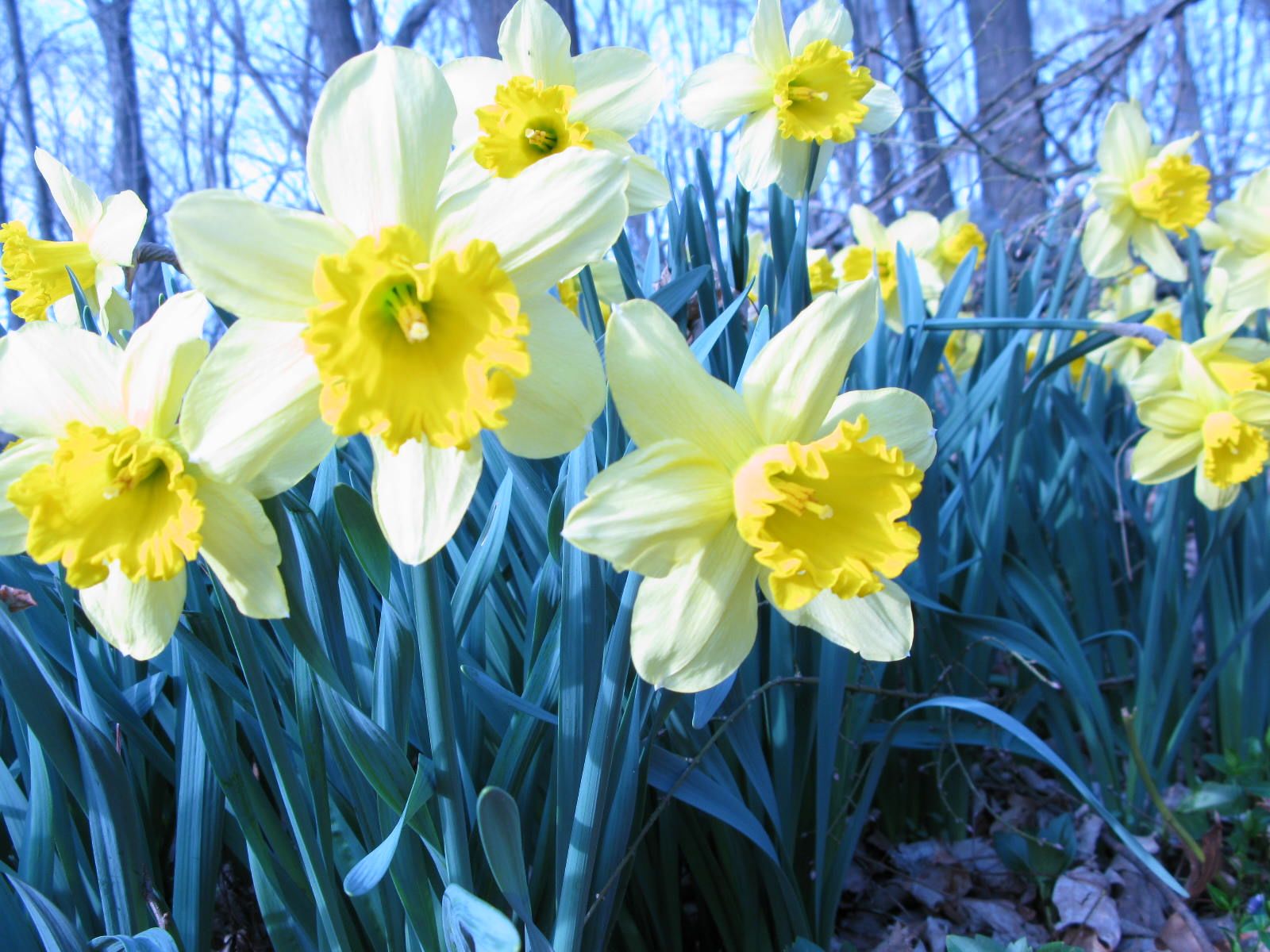
Photo by Katie Cullinan

Here on the East Coast, Spring brings with it colorful flowers, warmer breezes, and the return of birds and frogs. For me, I look forward to Spring for all of those reasons. But what I really think about during the long winter months is Spring Cleaning (no, I’m not crazy).

I dream of opening all of my windows, cleaning off the accumulated dirt and grime, and letting the sun shine in. There is something about brushing down the cobwebs and wiping off my baseboards that I find relaxing and almost meditative. It gives me time to pause and reflect. I can clear my mind.

When my mind is clear and unencumbered with daily tasks is when the best ideas float in. Those stories that have been churning in the back of my mind, and the characters figuring out what they want to say, finally strain to get out.

Last month, during a week of particular clarity (and in the middle of purging my children’s unused toys) I wrote two picture books. They were just ready to be written.

So how to you clear your mind of your mental cobwebs and start new work (or restart stalled work)?

I’m off to find something else that needs cleaning. Or to plant some lettuce in my vegetable garden. Anything for some quiet time. I have 29 ideas left from last November’s Picture Book Idea Month (PiBoIdMo) to work on, after all.

Photo by Katie Cullinan