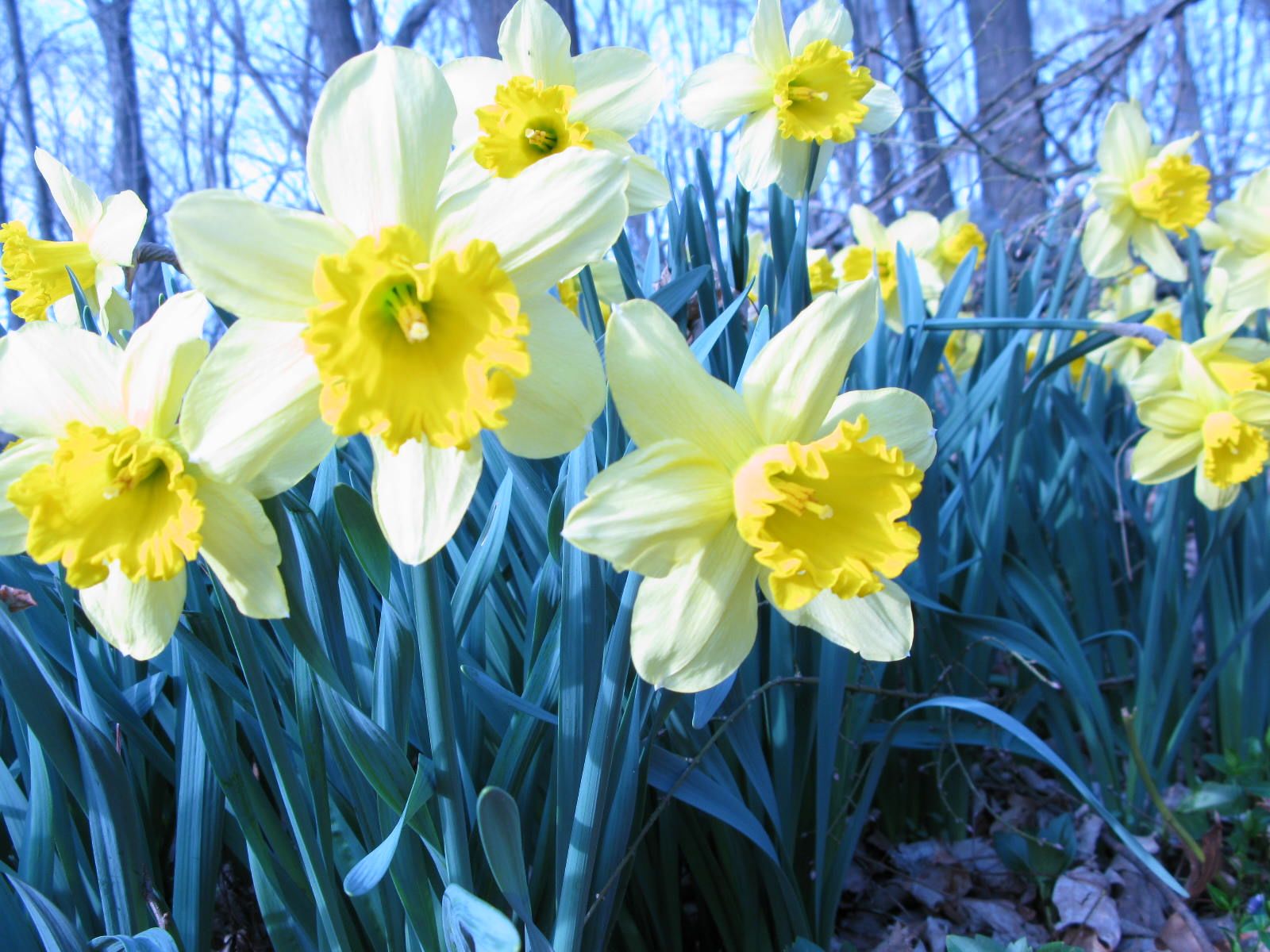
Happy Birthday!

Please bear with me as I depart from my usual topics to wish my mother a very Happy Birthday!

Photo by Katie Cullinan

Yesterday was a significant birthday for my Mom (I’ll do the gracious thing here, and not mention which one), and we celebrated in style. I sprung for some whole lobsters, along with salt potatoes, local corn on the cob, and rolls. It reminds me of clambakes we used to have every summer, with the lobsters sitting in for the clams this time.

It was yummy. More importantly, we were all together. My Mom and Dad made the four hour trip to my house in the morning, and my brother surprised us by driving down from Massachusetts.

For every birthday, Christmas, and Mother’s Day, all my Mom has ever asked for is “good kids.” That has been extended to “good kids and grandkids.” As you can imagine, that is very difficult to shop for (and potentially hard to deliver when you are a child).

I watched my Mom survey the many pots of cooking food, warm conversation, and her family all around her. And she got a little teary. At that moment, I realized that it wasn’t “good kids” she really wanted. What really makes her happy is being with her family. Silliness, chaos, weirdness and all. For this birthday, we were able to deliver.

Happy Birthday, Mom. We love you very much. Best wishes for many more healthy, happy birthdays!

Camp NaNoWriMo

Camp NaNoWriMo isn’t your ordinary summer camp. There’s no capture the flag (the last time I played the game, my braces ended up going through my bottom lip); no bug juice or grilled cheese made with Kraft singles; no saggy bunk beds or outhouses (yes, my summer camp did have an outhouse!). In other words, Camp NaNoWriMo has none of the good stuff. Just kidding!

Last November, I participated in National Novel Writing Month (aka NaNoWriMo). Basically, a bunch of people (256,618 to be precise) get together as an online motivational writing group to each write their own 50,000 word novel. Many people aim for much higher word counts. Me, I squeaked by with just under 51,000. But I did it! Along 36,843 other people, I was a NaNoWriMo winner.

Basically, I completed the first draft of a young adult novel that I am now actively revising with the help of my critique group. The process of cranking out 50,000 words in 20 days (yes, I finished early) was fascinating. I woke up early and wrote for 30 minutes. If my son played by himself, I spit out another 350 words. When he napped, man, I could sometimes get in 1500. And of course I wrote into the night. I sent daily email updates to family and friends, and the accountability (and some good whip cracking) kept me going. I loved having the deadline and luckily my story flowed out. Of course, now comes the hard part. Revision.

But I’m putting that project aside so I can do Camp NaNoWriMo, a slimmed-down, summer version of the November event. I’ll still post my word count online, but I’m not planning on being as aggressive. (I’m writing this blog now, for example. Last November, I barely spoke to my family). The way I see it, there’s no point in not trying to complete a first draft. So, today as my sick son took his nap at 8:15 am (!!!), I typed out the first 879 words of my new, untitled WIP. Now, last November I managed over 3000 on my first day, so I’ll have to be okay with a slower pace.

I strongly encourage you to experiment with one of these events. They are free to participate in, you get some great discounts on all sorts of writing related things/services, and it’s just darn cool to say that I wrote a novel (albeit a bad one) in a month. Camp NaNoWriMo has two sessions–June and August.  What respectable camp would have only one? And of course, you can join NaNoWriMo in November.

Hope to see you there!

Surrender

When asked if they have any regrets, some wise people will say that they do not. All of their experiences have made them who they are.

Our experiences, good or bad, influence us as people. As writers, our experiences can also shape the characters, settings, themes, and mood of our stories.

Specifically as children’s writers, we draw from many places. A memory of a warm, loving childhood. Or a not so great one. A book we read. A movie we loved (or hated). A place we visited full of rich culture and surroundings. We may have even observed a child, doing or saying something innocent, loving, heartbreaking, or brave.

I have recently been reading Awakened by the Moon, the biography of Margaret Wise Brown by Leonard S. Marcus. Brown is best known as the author of the timeless Goodnight Moon and Runaway Bunny. In addition to observing the children that she worked with, Margaret believed that “memory {was} the ultimate source of her creative work.” She said that, “as you write, memory will come out in its true form.”

Everything informs our memories, whether we know it or not.

Material for our stories can come from an infinite number of places. You need only open yourself to it. Surrender. Let the memories wash over you. Truly open your eyes, heart, and mind, and see what comes.

You may find that the laugh and broad smile of an old friend makes its way into one of your stories. You may set a story on an unspoiled beach where you once stood as your cousin got married. You may remember some advice you once gave, and try to find a way to give better advice in your written world.

“Write what you know,” has been said to writers for many years. If we are brave enough, we may realize we know more than we think we do.

The Lesson of Mulberry Street

27. Maybe 28.

That’s how many times Theodor Geisel’s first book, And to Think That I Saw It on Mulberry Street, was rejected before ultimately being picked up by Vanguard. Geisel is better known as Dr. Seuss.

My childhood memories long gone, I have read Seuss’s books countless times as an adult. The Lorax was a staple in my work as an environmental educator. And now my son has started to enjoy Seuss’s early wordplay books such as Hop on Pop and Green Eggs and Ham. It’s hard to imagine that at one point his brilliance was rejected. 27 times. At least.

Rejection is on my mind these days. Or perhaps a better word to use is declination. That was recommended to me as a kinder word for what amounts to someone saying, “You’re not good enough.”

Yes, that’s harsh. But who among you hasn’t felt exactly that?

Try as I might, a tiny voice—negative and persistent—whispers in my ear each time I’ve sent my manuscript out. Of course, another voice—encouraging and hopeful—is also whispering, but you can guess which one maintains a slight edge.

As a writer, I’m a neophyte. I started writing two years ago, am pre-published—another nicety I learned at a conference—and have only sent out my manuscript 15 times, all within the past four months. I’ve gotten 10 rejections. Dr. Seuss claims he almost burned that first manuscript, and I can relate to the urge. But I’m holding on.

At the NYC conference of the Society of Children’s Book Writers and Illustrators (SCBWI), Jane Yolen admitted that she herself had a desk full of manuscripts that had been repeatedly rejected. If you’re not familiar with her work, rectify that immediately! She’s written over 300 books, including the popular picture books Owl Moon and How Do Dinosaurs Say Goodnight? As with Seuss, it’s hard to imagine someone that prolific and successful ever having their work rejected. On her webpage, Yolen admits, “A writer never gets used to rejections.” I suppose that’s true, though I’ll have to stick with this much longer to appreciate Yolen’s experience.

I’m not sure how she deals with it. As for me, my current critique group is one of the main reasons I’m still writing. (If not, THE.) Sure, my parents and husband are ardent supporters, but that’s kind of written into their contracts, isn’t it? For now, I trust that my critiquers will tell me to shelve a project when I’ve worked it as much as I can or when more opportunities to keep revising remain. Luckily, I still have a bank of stories that I’m yearning to write and share.  I am learning to write just for me, and oh how slow the learning curve is, but if I can allow my love of storytelling to drive my writing, then I will write until my story bank is dried up.

And so I carrying on, like Dr. Seuss did, not fully trusting that I’ll find that right agent, but hoping, deeply hoping to find a match for my manuscript and my career.

How do you keep going in the face of rejection? What are your criteria for putting a project aside? How do know when to make a work extinct versus dormant?

-Joanna

Creating Something New

My son and I read a sweet story last week: Lissy’s Friends written and illustrated by Grace Lin.

Cover of

Cover of Lissy’s Friends

It is the story of Lissy, the new girl at school. That probably sounds familiar. However, the twist in this story is that to deal with knowing no one, Lissy creates some friends – from origami paper. She starts with a bird fashioned from the school menu, which she appropriately names Menu. Lissy creates many more animal friends, until a playground mishap blows these paper friends away to Paris.

Other children have been watching, and they want to make origami too. Lissy makes new school friends by sharing a talent special to her – origami. She finds new friends on her own terms.

I know a little about origami. My father makes origami boxes and animals to delight his children and grandchildren. He has given me several origami kits over the years, which I have used to make some basic origami animals. See one of my son’s creations at the bottom of this post.

Origami reminds me of the creative process, as well as the revision process. Origami begins with just paper (albeit, colorful paper); paper that is two dimensional and flat. With a few folds, it is turned into something that has a life of its own. A story has similar potential. It can start with an idea, and grow into something that has a life of its own.

It can be scary to revise, especially if you consciously notice the story changing. But if you allow the process to take the story where it wants to go, the results can be amazing. Your story sometimes goes where you never thought it would, and it is a much richer, more interesting story after the journey.

How do you create something transformational in your writing, or in other creative pursuits?

I would also like to give a plug to the program that brought Lissy’s Friends to my family. Both of my children have participated in Dolly Parton’s Imagination Library. It is a program that brings a new, age-appropriate book to preschool children in their homes each month until they turn five. Our local United Way sponsors Imagination Library in our area, and my children love receiving a book in the mail addressed to them. They can’t wait to see what stories each new book has to tell!

Writing Tip #4,982 – Read the newspaper

Last January, Katie and I attended the NYC conference of the Society of Children’s Book Writers and Illustrators. As anyone who’s ever been to a conference of 1200+ people can imagine, it was a weekend of contagious energy, slightly numb rear-ends, and spinning minds. No doubt Katie and I could both write endlessly about all the things we thought about at the conference and have discovered since. Today I’d like to talk about ideas and where to find them.

Surely, lots of ideas come from our own experiences or people watching or imagining what-if situations. But Regina Brooks of Serendipity Literary Agency gave me a new idea (though it may be old hat to you). She suggested writing about a current news headline from a child’s perspective. Now I scour the paper for ideas and have a clipping file.

Here’s a sampling from today’s Jackson Hole Daily, a local paper in my hometown:

Latin Resource Center rings in Cinco de Mayo

How ‘endocrine disrupter’ chemicals negatively affect us

4 students killed at Syrian university

Pepsi revives Michael Jackson promotion

and my personal favorite,

Inmates take on cats as pet project

What a range of topics — some political and disturbing, others emotional and heartfelt. And don’t forget, humorous. Think of all the places you could run with any of those headlines. Endocrine disruption could be sci-fi or dystopian. Pepsi and Michael Jackson might inspire a dance-off for a middle grade novel. A dual language book about a community Cinco de Mayo celebration would be fun as well as informative.

The recent news of student deaths in Syria is both shocking and severe, and I apologize if the inclusion of that headline seems to cross some invisible line. But to say that kids — albeit older young adults — wouldn’t be able to handle such a topic would do those readers a disservice. Writing about emotionally and intellectually charged books can be done tastefully and without judgement. Take, for example, Between Shades of Gray by Ruta Sepetys. The book details a teen’s journey during Stalin’s forced relocation of Lithuanians during World War II. Ms. Sepetys’s story is heartbreaking, but so important and eye-opening. So, do not be afraid.

I encourage you to experiment with headlines – for your writing, teaching, or whatever else you do. As for the headlines above, they’re fair game. Let’s see what you can come up with.

I’ve found that I love scouring the paper (and yes, it’s actual paper and not internews, and  yes, I do read the articles) and my clipping file is overflowing. So I say, Thank you, Regina!, and hope that someday I might do one of those headlines justice.

-Joanna


Spring Cleaning

Photo by Katie Cullinan

Here on the East Coast, Spring brings with it colorful flowers, warmer breezes, and the return of birds and frogs. For me, I look forward to Spring for all of those reasons. But what I really think about during the long winter months is Spring Cleaning (no, I’m not crazy).

I dream of opening all of my windows, cleaning off the accumulated dirt and grime, and letting the sun shine in. There is something about brushing down the cobwebs and wiping off my baseboards that I find relaxing and almost meditative. It gives me time to pause and reflect. I can clear my mind.

When my mind is clear and unencumbered with daily tasks is when the best ideas float in. Those stories that have been churning in the back of my mind, and the characters figuring out what they want to say, finally strain to get out.

Last month, during a week of particular clarity (and in the middle of purging my children’s unused toys) I wrote two picture books. They were just ready to be written.

So how to you clear your mind of your mental cobwebs and start new work (or restart stalled work)?

I’m off to find something else that needs cleaning. Or to plant some lettuce in my vegetable garden. Anything for some quiet time. I have 29 ideas left from last November’s Picture Book Idea Month (PiBoIdMo) to work on, after all.

Photo by Katie Cullinan

Unearthly and Ashfall: A Comparison of YA Themes

I read a lot of young adult fiction, from contemporary coming of age stories to urban fantasy. Very fun stuff. Some of it makes me cry (most notably John Green’s recent work, The Fault in Our Stars) and some has me in stitches (what can I say, The Fault in Our Stars). A good number of current YA novels tackle a dystopian/post-apocalyptic future or fantastical present. I’m going to compare the two I’m reading now.

Unearthly, by Cynthia Hand, tells the story of an angelblood. Clara Gardner is a quarter angel (on her mother’s side). One element to this story I found refreshing was that Clara knows her family secret from the beginning. Every angelblood has a purpose, a task they must complete, and Clara is just waiting to discover what her purpose is. Ashfall, by Mike Mullin, is a post-apocalyptic tale of what might happen if the Yellowstone supervolcano erupted. Alex Halprin is home alone when his house is struck by chunks of volcanic rock erupted from the Yellowstone Caldera almost two states away. His family isn’t with him — they’re east, and hopefully safe — and the book follows him as he tries to find them. Both books are the first in a series.

I’m enjoying both stories, and I’d gladly recommend them to any one who likes YA, but this isn’t really a book review.

What interests me is, how do I respond as a reader to these two very different possible futures?

Unearthly awakens the part of me that wants to believe in something other. Meaning the part of me that loves fairies, waterhorses, LOTR, and such. Could I be an angelblood? I know it sounds hokey or ridiculous or insane. Rationally, I know  my parents weren’t angels (no offense, Mom). But doesn’t each one of us fantasize about being special in some way? I certainly did as a teen, and I still do now. So, Unearthly takes me to a place where that could be possible, in a hopeful sort of way.

Quite the opposite with Ashfall. I live in Jackson, WY. According to an interpretive park ranger I asked on a recent Yellowstone visit, if the Yellowstone supervolcano erupted, I would be dead before I was even aware of it. The future of Ashfall seems more plausible, real, even though it’s unlikely that the volcano will erupt while humans are still on Earth. And this kind of story affects me in some kind of visceral way. What would I do in the event of a natural disaster? Or war? Would I be one of the survivors? Honestly, with how griped I am reading this story, I hope I never have to answer that question.

In thinking about this comparison, I realize that I read both types of books for separate reasons. I like to slip away into other worlds or possibilities, and at the same time my (more) rational mind likes to flirt with tangents of our current reality. Lucky for me, a plethora of books offering me both experiences is out there.

What kind of stories do you like to read? Do you want to be an angelblood? Would you survive the supervolcano?
Make Me Laugh

Mo Willems is hilarious. Didn’t you know?

Knuffle Bunny: A Cautionary Tale

Knuffle Bunny: A Cautionary Tale (Photo credit: Wikipedia)

My son and I began our introduction to Mo Willems with Knuffle Bunny: A Cautionary Tale, and Don’t Let the Pigeon Drive the Bus. Both books were charming and funny. In Knuffle Bunny, Willems employs a creative use of photography along with the drawn characters. In short, we love these books. I enjoyed buying these books to add to our permanent collection.

Now that Aidan is in Kindergarten and has begun reading on his own, we’ve started reading Mo Willems’ easy readers together. Our favorites are the Elephant and Piggie series. With basic drawings of the characters (no watercolors or elaborate Jan Brett-style illustrations), you are able to focus on the story. Is the story simple? Yes. Is it witty and hilarious? Absolutely!

These books make both of us laugh out loud. When we read Can I Play Too? my son giggles when Gerald and Piggie try to play catch with a snake, and repeatedly bonk him on the head. I laugh when Piggie raises an eyebrow to figure out who is “reading them” in We Are in a Book!

Cover of

Cover via Amazon

In short, we are convinced he is a genius. He manages to create expressive, witty characters with just a few well placed lines. His stories are simple, to-the-point, joyful, funny, and make you want to read them again and again.

Additionally, I researched Mo’s background and discovered he formerly wrote for Sesame Street (which earned him multiple Emmys). I’m sold. Anyone who works with the likes of Bert, Ernie, Knuffle Bunny, and the Pigeon is cool in my book. Now if I can just find a way to capture even an ounce of his humor in my stories.

What authors make you laugh? What is it about their books that tickles your funny bone?

Without Pen and Paper

I recently read that the writing process takes place all the time, not just in front of a computer or with pen in hand. And of course, I wondered if this was true for me. I covet my time with a notebook or at the keyboard, because that is when the ideas get recorded and fleshed out. And I’d gripe about all the time I wanted to spend that way but couldn’t because life — parenting, cooking, etc. — kept getting in the way. But the more I thought about it, the more I realized that I am often writing without any physical tools.

On a recent trip to Southern Utah, a completely new idea came to me while I was hiking. Looking back, I can’t even recall what ignited the spark of this story. Regardless, the idea spun around in my head while we are hiking desert trails and making s’mores and driving across the open, stark country. Today is Paul Theroux’s birthday; he is a well-known travel writer. He said, and I’m paraphrasing here, that writers should leave home in order to write. I think he was implying that travel allowed writers an escape from the pressures of writing (representation, finances, publication, etc.) but I also think that travel can help spark new ideas, even when a writer isn’t looking for one. And there I was, hiking through slot canyons with my toddler, ruminating on this new idea, feeling the characters come to life, testing out the voice, and realizing all the nuance this story would require.

Rumination is a good word for it. Because I am chewing and rechewing an idea to test its viability (in my eyes, of course). Each time I revisit it, some new twist or realization comes with it, and it becomes increasingly digestible as a story. Okay, enough with the ruminant metaphor.

The point is that knowing that the writing process is ongoing, can occur without a computer, has freed me from the trap of not having enough time. Of course, I’ll never have enough time to write. I always seem to want more, especially as more  and more ideas form in my head. But I can work on them anytime — in the car, on a bike ride, at the grocery store. This flexibility becomes crucial at some point, because then when I come back to the keyboard or pen, the ideas flow freely and I spend considerably less time staring at the pushpin holes scarring the wall. And truthfully, few of my stories have come to me while I was sitting at the computer. Most have come while I was doing something else, forcing me to silently repeat the plot or opening lines so that I wouldn’t forget them before getting to a computer.

Do you write in your head or do you pull from your subconscious while typing away? How does time away from your life — through travel — affect your writing?