Review: Room on the Broom and Contest Update

9780803738416

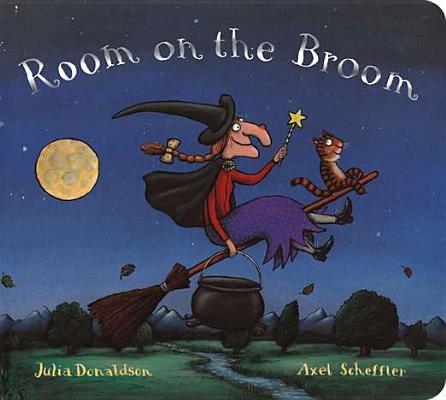
Room on the Broom

Written by: Julia Donaldson

Illustrated by: Alex Scheffler

Dial Books, 2001, Hardcover Edition

Target Audience: 4-8 (and my 3 year old loves it too)

Genre: Fiction

Theme: Holiday/Seasonal

How We Discovered This Book: Grandma bought this for my daughter last Halloween, and it has quickly become our favorite Halloween book.

Summary: The story begins: “How the cat purred/ and how the witch grinned/ As they sat on their broomstick/ and flew through the wind.” A witch takes a broom ride and needs help from some animal friends along the way.

What I Liked: The rhyme is fluid, and never forced. I really admire writers who can write well in rhyme. I don’t attempt it, for fear of failing miserably. The story is cute and fun. At one point it could have gotten spooky, but a creative twist keeps it kid-friendly.

What Did My Kids Think? My kids ask for this book frequently, and sometimes they ask to read it again as soon as we’ve finished. I won’t spoil the twist for those of you who haven’t read it yet, but it gives the kids and me a chuckle every time.

Resources: Julia Donaldson has created her own companion book of activities with stickers, puzzles, and games. More can be found on the official Room on the Broom webpage.

The Tall Stories Theater Company has a study guide for teachers or homeschoolers to use, with activities like Mixing Up A Spell (literacy activity), Multi-Monster collage, story comprehension, and Rhyme Time.

Check out more picture book reviews each Friday at Susanna Leonard Hill’s Perfect Picture Book Friday.

Last week I kicked off a Halloween sounds story contest. Unfortunately, we did not have any entries, so there is no prize to award. If you are interested in a Halloween story contest, but our contest was too long or too complicated for you, check out the Halloweensie contest on Susanna’s blog. It kicks off on Monday and runs through Halloween. I’m planning to enter again this year.

Appreciating the Genres

As a children’s book writer, I have a good appreciation for the genres of our field. I began my journey in children’s book writing with picture books, and currently I am working on three middle grade novels. My critique partner Joanna rocks the young adult segment.

As my son gets older, he still enjoys having picture books read to him but his choices are different when he reads for himself. He is reading chapter books, but I am struck by the broad range of choices in this genre.

Aidan really skipped over the beginning chapter books, like Frog and Toad, or Nate the Great. They didn’t seem to be “meaty” enough for him. He enjoys adventures, especially those in far away locations or times. The Magic Treehouse books are right up his alley. He frequently connects things that he learns about (Ancient Rome for example) with what he read in a Magic Treehouse book. We are lucky to have a family friend that gave us a big collection of Jack and Annie books (thank you Chrissy!).

I read a Facebook post this summer where Moms were discussing chapter books with appropriate content for young kids. One mom suggested Geronimo Stilton. I had never heard of him. Luckily, our library had some of the books, so we tried them out. And Aidan fell in love.

The Geronimo Stilton books are written in first person by a mouse named Geronimo Stilton. He is the editor of the Rodent Gazette, and the books are told in his voice. He is the “author” ala Lemony Snicket. (Spoiler alert: the books are written by Italian author Elisabetta Dami, distributed by Scholastic in the US)

Image 1

The really creative part of the Geronimo Stilton books is how they bridge the transition from picture books to novels. I’m sure many children miss the rich images from picture books when they move to longer books. In the Geronimo Stilton books, there are plenty of illustrations, maps, and pictures. They also illustrate the text. Yes, the text. They use colors, different type faces, even illustration to further illuminate the words. This comes in quite handy for a child who is actively expanding their vocabulary. Combine all this with an exciting adventure story, and you’re on your way!

Image

If you haven’t yet checked out Geronimo I encourage you to give him a try. There are currently 55+ books in the regular series plus 7 graphic novels. He even has his own web page with games and videos, as well as places to draw and write.

What other chapter book gems would you recommend? Please share in the comments!

Review: Read to Tiger

ImageRead to Tiger

Written by: S.J. Fore

Illustrated By: R.W. Alley

Penguin Books, 2010, Imagination Library Edition

Target Audience: Ages 3-8

Genre: Fiction

Theme: Cooperation

How We Discovered This Book: My daughter received this as her monthly Imagination Library book in July. For more information on the Imagination Library, you can read my previous post.

Summary:

A boy is trying to read a book, but a tiger keeps interrupting him with chomping gum, playing trains, and pretending to be a bear. Neither one will be happy until they find a solution that works for both of them.

What I Liked:

This a simple story (we never find out the boy’s name, but it doesn’t matter). The boy tries to get Tiger to stop over and over until they decide to read the tiger book (!) together. I wonder what would have happened if the book the boy was reading was about something else?

What Did My Kids Think?

My son has transitioned to chapter books that he reads himself (he loves, loves, loves Geronimo Stilton) and my daughter can’t get enough of picture books, so I thought I’d start listing what they both thought. My son saw the parallel between this book and how he reads to his stuffed puppy sometimes (who he pretends is alive sometimes, too). My daughter liked the illustrations, and the look on the tiger’s face (with is very innocent and inquisitive, not threatening at all). This story also reminds me of when my daughter is bugging my son while he is reading alone, so he decides to read to her instead.

Resources:

Tiger crafts for kids: DLTK’s crafts for kids

Activity: The tiger uses lots of sounds when he plays- choo choo, chomp chomp, grrrr. Brainstorm other sounds. Then try to guess what tiger (or a child) might be doing if they were making that sound.

Review – The Magic Rabbit

The Magic Rabbit coverThe Magic Rabbit

Written and Illustrated By: Annette LeBlanc Cate

Candlewick Press, 2007, Hardcover Version

Target Audience: Ages 4-8, although my 3 year old enjoys it

Genre: Fiction

How We Discovered This Book: This book was among the Easter/Spring books at our library (perhaps because it has a rabbit in it, but it doesn’t really have anything to do with Easter or Spring).

Summary: Ray the Magician and his bunny assistant do everything together. When they are separated while performing on the city streets, bunny must try to find Ray before it gets dark.

What I Liked: It is a simple story, where children are rooting for the pair to get back together. There is enough suspense, without heavily manufactured “dangers.” The author/illustrator also has chosen to prepare the book completely in black and white, with the exception of some important gold stars. These illustrations really support the purity of the story.

What Did My Son Aidan Think? After repeated readings, Aidan discovered that Ray is in the background of many of the pictures where bunny is looking for him. Each time we read it, Aidan “finds” Ray, and many other hidden details in the rich illustrations. Aidan also loves the sweet ending. Aidan is now 6-1/2, so I would expect his interest in picture books to wane eventually, but I have been pleased to discover that he still loves the picture books that are of high quality in story, theme, and illustration.

Resources:

Magic and Magician’s Rabbit Activities

Teaching Activities for learning words with a silent E (with the help of a magic rabbit)

Learn Easy Magic Tricks- for kids (and beginning adults!)

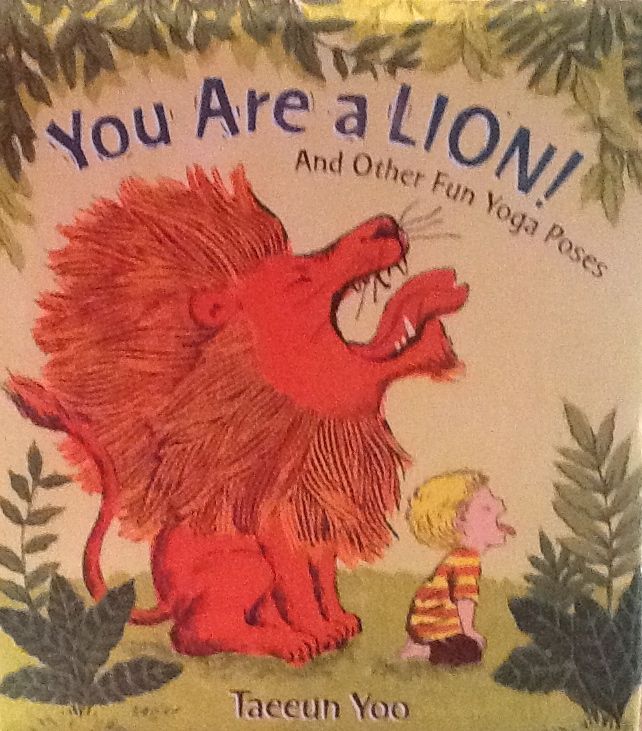
You Are a Lion – Review

You Are a LionYou Are a Lion

Written and Illustrated By: Taeeun Yoo

Nancy Paulsen Books, 2012, Hardcover Version

Target Audience: Ages 3-5, although my 6 year old loves it too

Genre: Non-fiction

How We Discovered This Book: This book was read at the weekly story time at our local bookstore. Elizabeth loved it so much, we bought it so Aidan could join in at home.

Summary:

This book introduces children to yoga. On each page, a child tries another yoga pose, with prose to guide them.

What I Liked:

The prose flows nicely, and introduces one yoga pose at a time, based on animals or a mountain. Children can follow along without really knowing they are doing yoga. The smoothness of the language and the pacing caused my children to focus so that they could follow along, which is a big accomplishment in my house.

What Did My Son Aidan Think?

Aidan likes finding a spot on the carpet next to his sister, ready to do each of the poses. He also enjoys reading the book aloud while Elizabeth completes the poses (with some coaching from him, of course). He has now proudly added “Namaste” to his vocabulary.

Resources:

The Kids Yoga Resource: additionally information for children interested in yoga, as well as many related links about kid yoga

Interested in teaching some yoga in your classroom? Check out this site, which has some tips specific to teaching children yoga, along with some coloring pages and other information.

Taeeun Yoo Etsy Shop: If you love the illustrations and would like to buy a print of the children doing yoga (or prints from her other books), check out her Etsy shop.

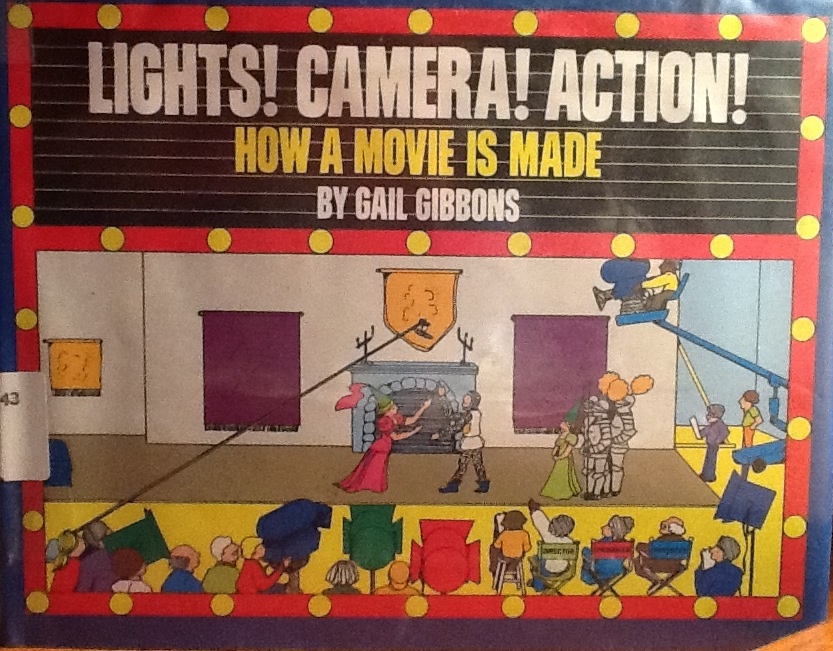
Lights, Camera, Action!

ImageLights! Camera! Action! How a Movie is Made

Written and Illustrated By: Gail Gibbons

Thomas Y. Crowell Publishing House, 1985, Hardcover

Target Audience: Ages 6-9

Genre: Non-Fiction

How We Discovered This Book:

My son is very interested in how movies and television is made. Some of this probably stems from the natural process of learning what is real, and what is not. However, he takes a distinct interest in “peeling back the curtain” and figuring out how things are accomplished. We have watched videos on movie makeup, special effects, puppetry, and techniques like green screens and stop motion animation, but I was in search of a good book to explain the big picture of making movies and television.

What I Liked About This Book:

Even though this book was published almost 30 years ago, it covers the broad process in such a way that it does not feel outdated. The whole process is covered from the writing of the script all the way to opening night. We get to see all of the preparation involved, and the many people needed to make a movie.

What Did My Son Aidan Think?

He enjoyed this book much better than several others we read, which were way too general or outdated. This book seemed to have just the right amount of detail without getting bogged down in it. After reading this book, my son wants to learn more. Any suggestions on this topic? I have my eye on a Klutz book on stop-motion animation, but I’d love any suggestions for picture books.

Resources:

Teaching Resources: This site has TONS of ideas for teaching kids about television and movies.

Write Your Own Activity Script: This site walks you through how to write a script with kids, and then mount a production. They base the script on Jon Sciezka’s The True Story of the Three Little Pigs, so it sounds extra fun.

Review: Race You to Bed

Race You to Bed

Race You to Bed

Written and Illustrated By: Bob Shea

Katherine Tegen Books, 2010, Hardcover Version

Target Audience: Ages 4-7

Genre: Fiction

How We Discovered This Book

We found this at our local bookstore, and fell in love with the bunny main character.

Summary

A fuzzy bunny races the reader to bed – running, on a boat, on a plane. All in charming rhyme.

What I Liked

The text is fun to read aloud for adults and kids, using nontraditional rhyme. The main character is drawn with big feet and fuzzy all over, which makes him visually interesting. Each page is a surprise to see what he’s going to do next.

What Did My Son Aidan Think?

Both my son and my daughter love this book. It is in frequent bedtime rotation at our house. Unfortunately, it does not make them hurry off to bed. Our favorite part is a personal one. At one point in the story, the bunny comes across his Uncle Ted. My kids also have an Uncle Ted, who  is a snappy dresser himself.Race You to Bed

Resources

If you enjoy this book too, and would like have more fun with it, here are some ideas to supplement the story:

– Which Version is Your Favorite? Read the book to your favorite child reader with your best bunny voice, and then challenge them to read it creating their own voice. You can even check out a video version made by Bob Shea. Then vote on which one was your favorite.

– The bunny has to overcome many obstacles to make it to bed. Talk about what obstacles they might have in their day. Or even what gets in their way as they get ready for bed.

Caldecott and Newbery Winners announced

This past Monday, two of the premier awards for children’s books were announced: the Caldecott and Newbery Medals. The Caldecott is awarded annually for distinction in picture book illustration. The Newbery is awarded for distinction in children’s book writing. You can learn more on the American Library Association’s website.

This year’s winners include:

Caldecott Medal: This Is Not My Hat, illustrated and written by Jon Klassen

Caldecott Honors:

  • Creepy Carrots!, illustrated by Peter Brown, written by Aaron Reynolds
  • Extra Yarn, illustrated by Jon Klassen, written by Mac Barnett
  • Green, illustrated by Laura Vaccaro Seeger
  • One Cool Friend, illustrated by David Small, written by Toni Buzzeo
  • Sleep Like a Tiger, illustrated by Pamela Zagarenski, written by Mary Logue

Newbery Medal: The One and Only Ivan, written by Katherine Applegate

Newbery Honors:

Congratulations to all of the winners! Looks like this is an extra good year for Jon Klassen.

So my mission today was to venture into the smallish Barnes and Noble in my town with my daughter, and spend some time looking through the books listed above. The only two I have read previously are Extra Yarn, and One Cool Friend (which we own). Unfortunately, my bookstore had NONE of these award winners. Very disappointing. I could go on and on how our Barnes and Noble needs to move into the space vacated by Borders so that it can have a proper selection, cafe, and places to sit… but that could be a whole post in itself.

So I will have to share my impressions on these books at a later time. I can tell you that both Extra Yarn (a tale about a girl who finds a magic box of yarn and proceeds to knit sweaters for everyone and everything) and One Cool Friend (about a boy who sneaks a penguin home from the aquarium in his backpack) are lovely, and are made even more charming by their illustrations.

Tomorrow I’m off to the winter conference of the Society of Children’s Book Writers and Illustrators (SCBWI), and I should have much to tell when I get back. Have a great weekend!

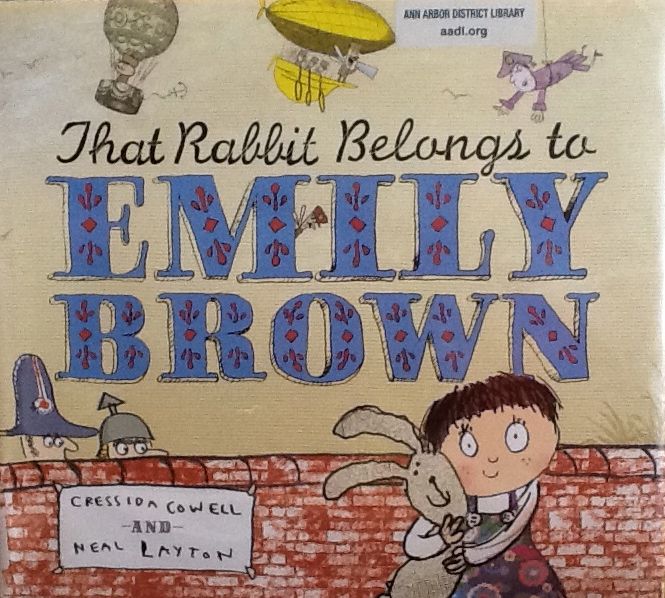
Review: That Rabbit Belongs to Emily Brown

This week I thought I’d share one of my children’s all time favorites. It may be a little hard to find, but I found it at both my library and through used book sellers.


That Rabbit Belongs to Emily BrownThat Rabbit Belongs to Emily Brown

Written By: Cressida Cowell

Illustrated By: Neal Layton

Orchard Books, 2007, Hardcover Version

Target Audience: Ages 3-7

Genre: Fiction

How We Discovered This Book

I happened to borrow this book from our library based on the cover art, and my children and I fell in love with it. I tracked down a used copy for our home library.

Summary

Emily Brown goes everywhere with her bunny, Stanley. They have all kinds of adventures: in space, in the Amazon rain forest, and many other places. The Queen decides she wants a toy as nice as Stanley. In fact, she wants Emily Brown’s bunny. Now.

What I Liked

The story is told with much creativity and humor. The illustrations not only complement the story, they have many additional details waiting for a perceptive child to find. The writing is so tight and critical to the story, you feel as if Ms. Cowell chose every word very carefully. There are no extra words in this story, but it doesn’t feel spare, either. We quickly know what Emily Brown is all about without much text.

What Did My Son Aidan Think?

Both my son and my daughter love this book. We currently read it at bedtime 3-5 times a week. They each have their favorite parts that they recite during the storytelling. Aidan’s favorite part (and mine) is when Emily Brown corrects the Queen’s military men, sent to get the bunny: “This rabbit is NOT for sale. And his name is NOT Bunnywunny. It’s Stanley.” My daughter loves when the men offer Emily ten talking dolls that say “Mama, Mama.”

Resources

If you enjoy this book too, and would like have more fun with it, here are some resources to check out:

Lesson Plans (Lesson 2)

Emily Brown Activity Sheets

Discussion Topics

New Review Format & The Legend of the Candy Cane

Welcome to 2013 everyone! As we begin this new year, we’ll be introducing some new types of posts to keep things interesting. You’ll see more regular book reviews, writing challenges, and perhaps even some interviews. We’re also open to suggestion, if there is something you would like to see us discuss. Feel free to post your thoughts in the comments.

We have included book reviews before, but I thought they could use a little more regular formatting. So here goes…


The Legend of the Candy CaneThe Legend of the Candy Cane

Written By: Lori Walburg

Illustrated By: James Bernardin

Zondervan Publishing House, 1997, Hardcover Version

Target Audience: Ages 4-8

Genre: Fiction

How We Discovered This Book

This book was read by my son’s teachers in religious instructions class. He liked it so much that he borrowed it from his school library.

What I Liked

The story is a charming tale of a possible meaning behind the creation of the candy cane. The story is religious in nature, but the story flows so smoothly, it feels more like a winter or Christmas book than a religious one. I am fascinated by mythology and the stories we create to explain those things that we don’t completely understand, so this story certainly appealed to me. The illustrations mirror the old-fashioned feel of the story.

What Did My Son Aidan Think?

Clearly, this book made an impression on Aidan for him to seek it out at the library. He also liked the illustrations, but his favorite part was that the story was about candy. Candy canes are the feature, but many other kinds of candy are a part of the story. Each time we read it, I think he drooled over the possibilities.